ChatGPT has decided to give businesses something marketers have wanted for a while.
Actual numbers.
On November 10, 2026, OpenAI launched Businesses in ChatGPT, a new beta that lets eligible businesses claim their profiles, manage their information and see how people are interacting with them in ChatGPT.
And yes, that includes mentions and website clicks.
Pretty exciting, right?
Unless you're an AI visibility platform. Then perhaps it's time to start worrying.
Or is it?
Because there's a difference between knowing how often ChatGPT references your website and understanding why your brand keeps getting overlooked when buyers ask for recommendations.
One gives you a number. The other starts a much bigger investigation.
Let's look at what ChatGPT's new Business Hub actually offers, what's missing, and why this development could be good news for businesses trying to understand their AI visibility.
1. ChatGPT now has business analytics. Here's what's changed.
Until now, understanding how your brand appeared in ChatGPT meant doing much of the investigating yourself.
You could ask questions, examine responses, record mentions and check which sources appeared. But there wasn't a dedicated first-party dashboard showing businesses how often ChatGPT referenced them or how many clicks those appearances generated.
That's what makes OpenAI's new Businesses in ChatGPT announcement significant.
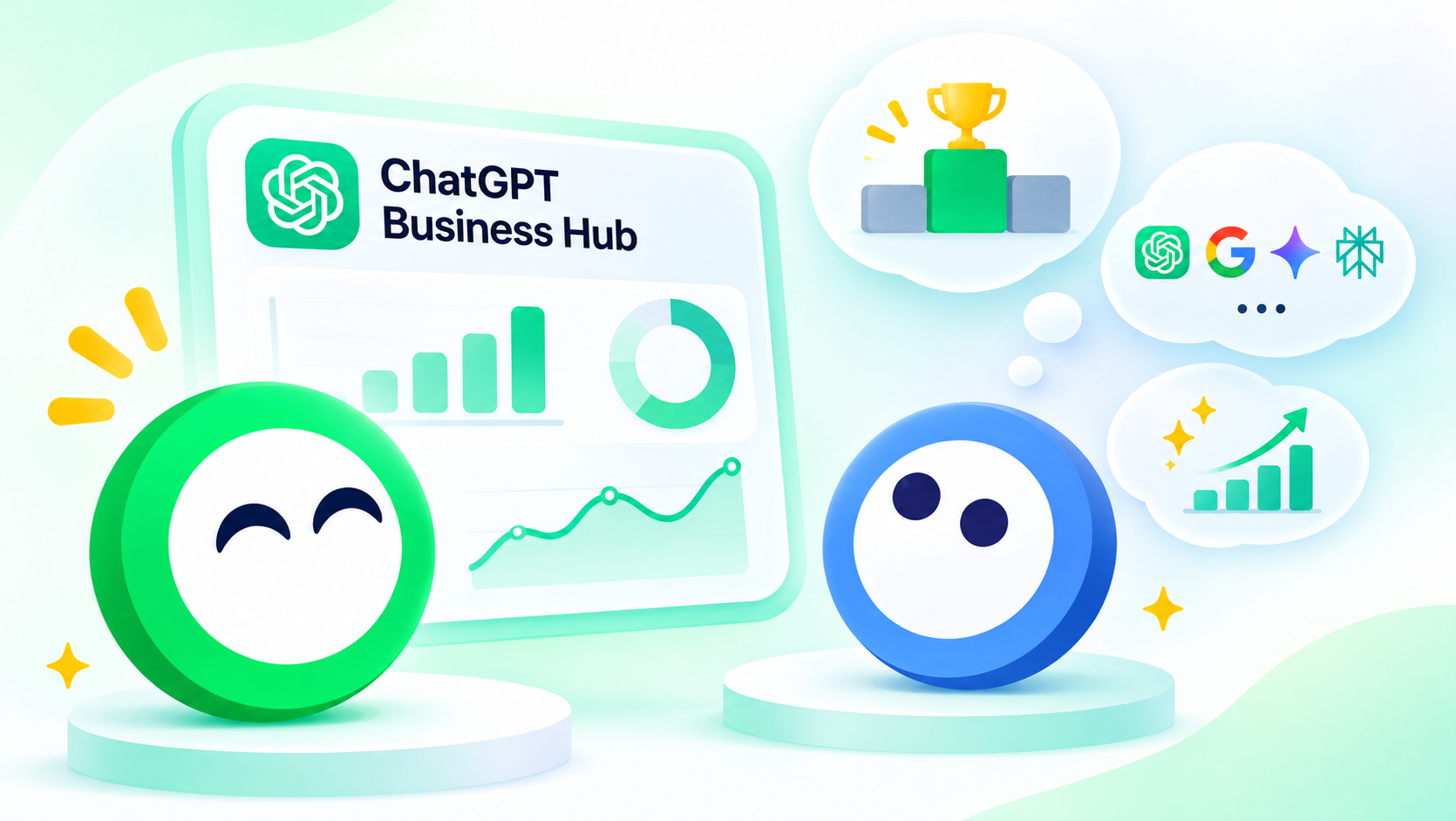
Through Business Hub, eligible businesses can claim their profiles, provide updated information and access aggregated insights about how people engage with them.
Think of it as an early step toward the kind of visibility reporting marketers have become accustomed to with Google Search Console.
Not a replacement for Search Console, and certainly not a complete equivalent. But a meaningful starting point.
For businesses investing in AI search optimization, it means another source of data to help answer a question that's becoming increasingly important:
Is our business actually being discovered through AI?
And here's where things get interesting. The dashboard can help answer that question, but perhaps not in the way you'd expect.
2. What can businesses do with ChatGPT Business Hub?
Business Hub isn't just an analytics dashboard. It also gives eligible businesses more ways to manage their presence in ChatGPT.
There are four main capabilities worth understanding.
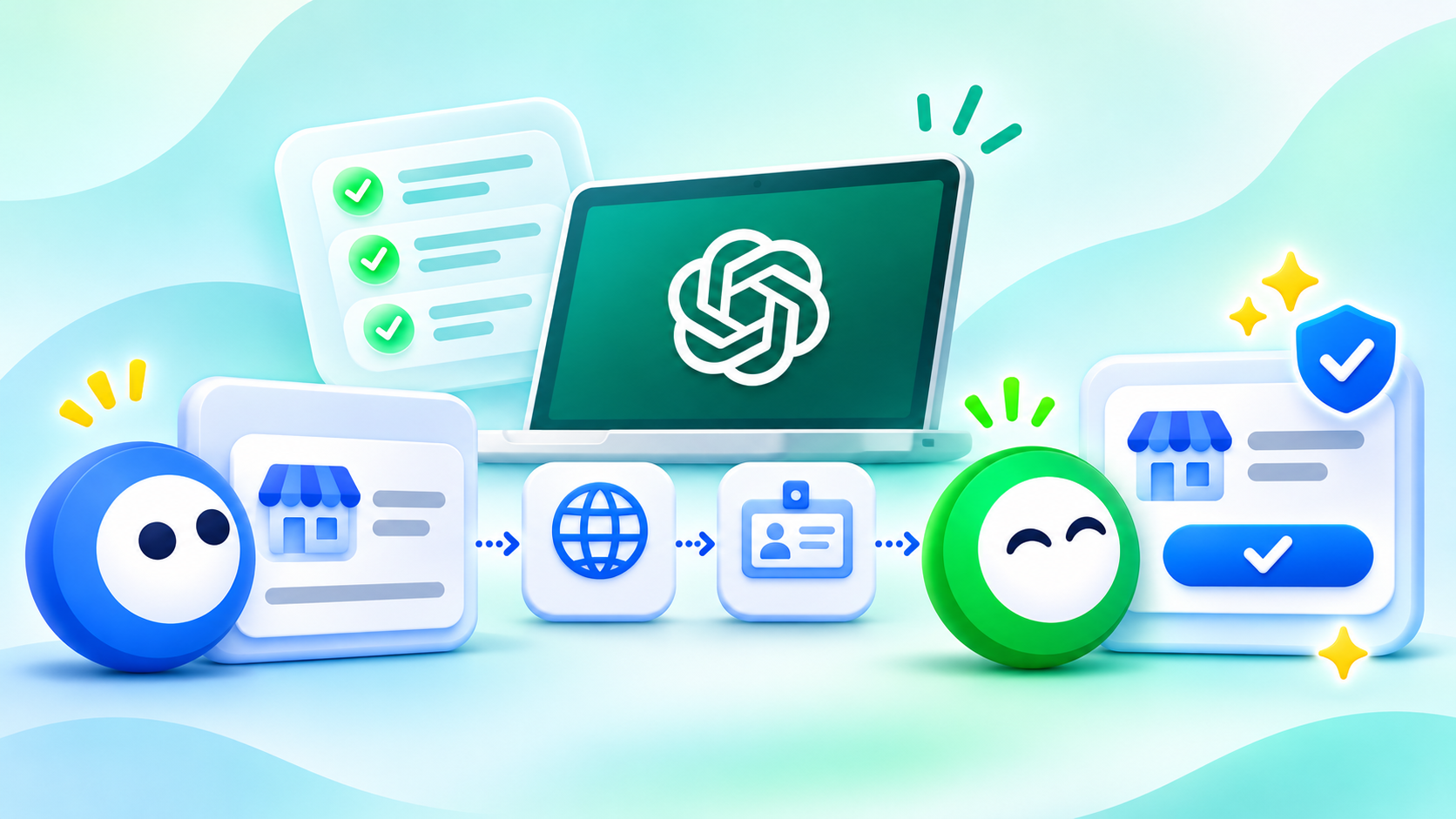
Claim and verify your business
Businesses can claim an eligible profile through ChatGPT's Business Hub.
Depending on the business, verification options may include a business email, phone number, website domain or Shopify connection.
Once your claim is approved, an additional identity verification process through Persona is required before you can manage business information and access insights.
A verified profile can also display a blue check, helping users recognize that the business has been claimed.
You can find the process in OpenAI's Business Hub setup guide.
Keep your business information up to date
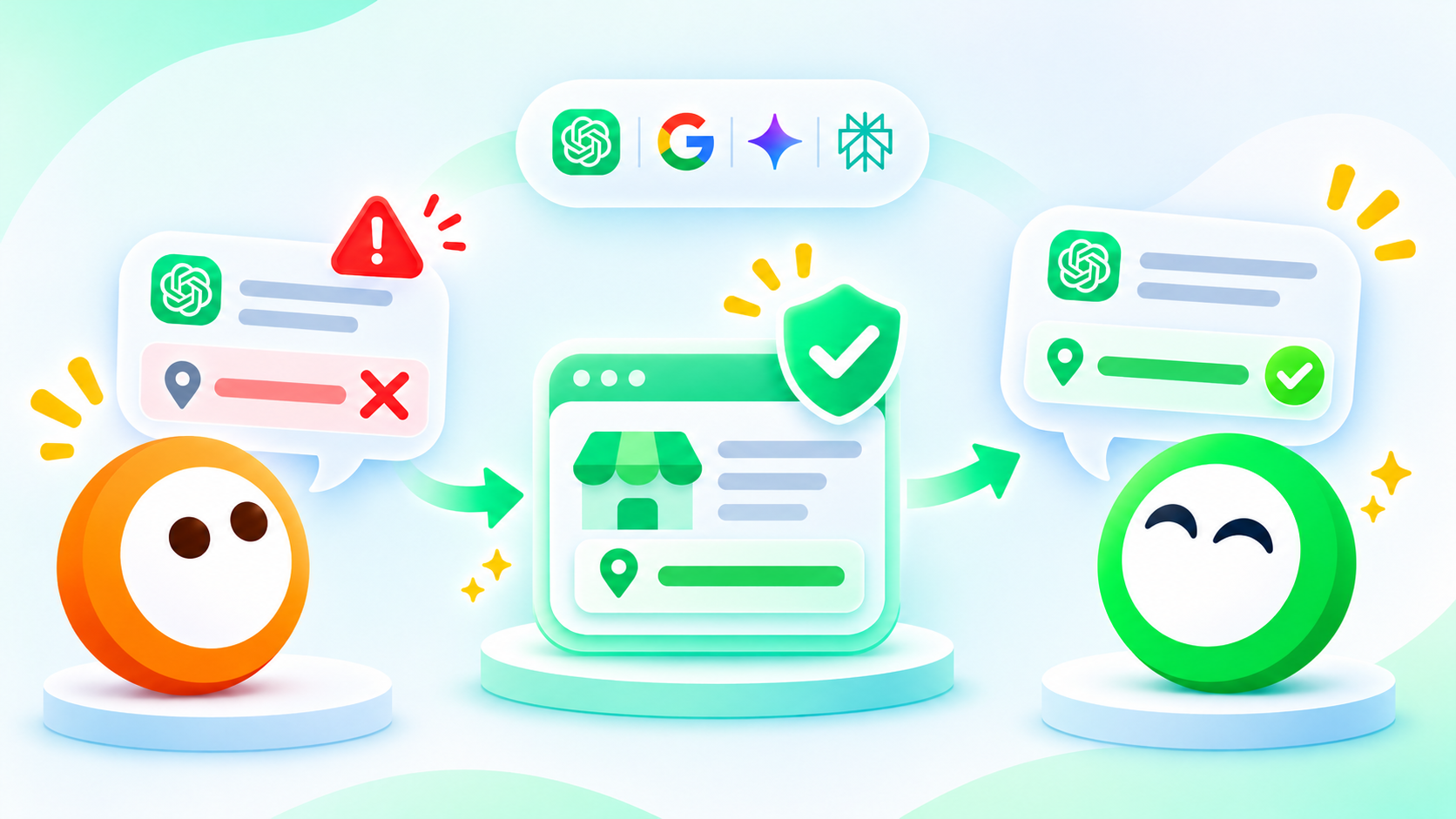
After verification, you can update details about your business, including its description, website and relevant product or service information.
Retailers can also connect product feeds containing information such as pricing and availability.
That's useful when product details change frequently.
But updating your profile doesn't guarantee that ChatGPT will immediately reflect every change in every answer. OpenAI reviews updates, and ChatGPT may still draw information from other sources.
See how people engage with your business
This is the part marketers will probably be most curious about.
Business Hub provides aggregated insights, including business mentions, website clicks and discovery topics.
You can start understanding whether your business is being surfaced in ChatGPT and whether users are following links to your website.
We'll look more closely at what those numbers mean in a moment.
Create a Business Agent
Eligible ecommerce and online service businesses in the United States can also create a Business Agent.
This gives interested customers a way to ask questions about products, services and policies using information provided by the business.
The important distinction? A Business Agent has its own clearly labeled conversation, separate from ChatGPT's independent responses.
Businesses can guide their agent's responses using their own information, but that doesn't mean they control what ChatGPT independently recommends.
And no, claiming your business doesn't guarantee higher placement in ChatGPT.
OpenAI makes that distinction clear in its official Businesses in ChatGPT information.
3. What do ChatGPT's new analytics actually measure?
Let's say you open Business Hub and find that your business received 500 mentions.
Lovely.
But what exactly counts as a mention?
This is where you need to pay attention, because OpenAI's definition is more specific than the way marketers often use the word.
Mentions don't always mean brand mentions
For an online business, OpenAI counts a mention when ChatGPT references the business's website.
If ChatGPT names your brand in an answer without referencing your website, that doesn't count toward this metric.
For a local business, the definition is different. A mention counts when ChatGPT displays a result for that business location, even if nobody clicks through.
That's a fairly important distinction.
Imagine someone asks:
“What's the best project management software for a small architecture firm?”
ChatGPT recommends your product by name, but the answer doesn't include a reference to your website.
From a brand visibility perspective, that's potentially valuable.
But under Business Hub's online-business definition, it wouldn't count as a mention.
So a business could be appearing in AI recommendations more often than its native mention count suggests.
Website clicks
Business Hub also shows recorded clicks from ChatGPT to your website.
This helps you understand whether people are moving from an AI answer to your own pages.
But a click isn't necessarily a completed website session, enquiry or sale.
For those outcomes, you'd still want to examine your website analytics.
Our guide to tracking AI traffic in Google Analytics 4 explains how to investigate that next step.
Discovery topics
OpenAI also provides discovery topics, which group common themes in ChatGPT answers where your business appears.
These might help you understand the general subjects associated with your business.
But they aren't the exact questions people asked.
OpenAI doesn't share individual customer prompts or conversations with businesses.
The Insights dashboard provides aggregated data over the past 28 days, and privacy thresholds can affect what becomes available. A blank metric doesn't necessarily mean zero activity.
The takeaway?
Business Hub gives you valuable first-party information. But you need to understand its definitions before treating those numbers as a complete picture of brand visibility.
4. What ChatGPT Business Hub still can't tell you
Imagine you're a US company selling accounting software to small businesses.
You open your new Business Hub dashboard.
Your website has been referenced hundreds of times. People are clicking through. Your discovery topics look relevant.
So far, so good.
But then a few questions pop into your head.
Which exact buyer questions are we winning?
Are people discovering your business through broad category questions, or only when they already know your company name?
Business Hub's aggregated discovery topics don't provide that level of detail.
Who is ChatGPT recommending instead of us?
If a competitor is consistently the preferred option for growing businesses, your own mention count won't necessarily reveal it.
Are we being mentioned but not recommended?
Your brand could appear in an answer while ChatGPT explains why a competing product might be a better choice.
A website reference count doesn't tell you how persuasive or favorable the surrounding answer was.
And what about the other AI engines?
Gemini, Perplexity, Copilot, Google AI Mode and Google AI Overviews may show very different results.
ChatGPT's native analytics won't tell you what those other engines are saying.
These aren't necessarily failures of Business Hub. It's a new product with a particular purpose.
But they're important gaps if your goal is to understand the wider competitive landscape.
5. Does ChatGPT Business Hub replace AI visibility tools?
Here's the question that probably crossed the minds of quite a few GEO platforms when OpenAI announced its new analytics.
If ChatGPT is going to provide businesses with visibility data directly, why would anyone need another tool?
It's a fair question.
And for some businesses, Business Hub may be enough.
If you simply want to claim your profile, keep your information current and monitor basic ChatGPT website references and clicks, the native dashboard could serve that purpose nicely.
But if you want to know which questions your brand wins, which competitors are being recommended instead and how the results differ between AI engines, you need a different kind of analysis.
Here's how the two approaches compare.
| Capability | ChatGPT Business Hub | Independent AI visibility monitoring |
|---|---|---|
| Official ChatGPT website reference counts | Yes | Not equivalent to first-party counts |
| Recorded ChatGPT website clicks | Yes | Usually requires other traffic data |
| Manage a verified ChatGPT business profile | Yes | Not its primary purpose |
| Track a chosen set of buyer prompts | Individual prompts not provided in Insights | Yes, depending on the tool |
| Compare competitor recommendations | Not provided in current Insights | Available in competitive monitoring tools |
| Compare multiple AI engines | ChatGPT only | Available in multi-engine platforms |
| Examine individual AI answers and citations | Aggregated Insights rather than complete prompt-level records | Available in answer-level monitoring tools |
| Identify opportunities for GEO improvements | Some context from native insights | Depends on the platform and its capabilities |
Neither approach makes the other irrelevant.
Business Hub helps you understand recorded activity within ChatGPT. Independent monitoring helps you investigate the competitive picture behind selected AI answers.
And that distinction matters more as businesses start taking AI search seriously.
6. Why this could actually be good news for GEO
At first glance, a major AI platform launching its own analytics might look like bad news for independent visibility tools.
But there's another way to look at it.
OpenAI may have just helped introduce AI visibility measurement to a much larger business audience.
First, it makes AI visibility feel more real
For many businesses, AI visibility has been a slightly abstract topic.
You hear people talking about GEO, AEO and appearing in ChatGPT answers, but it can be difficult to know where to begin.
Now imagine opening an official ChatGPT dashboard and seeing that your website was referenced hundreds of times.
Suddenly, AI discovery isn't just something marketers discuss at conferences.
There's a number attached to it.
That could encourage more businesses to start asking questions about their visibility.
Second, it gives marketing teams something to take into meetings
Picture a marketer explaining to their leadership team why AI search deserves attention.
Previously, that conversation might have relied heavily on screenshots, manually collected examples and third-party reporting.
Now there's also first-party ChatGPT data.
That doesn't mean every company will immediately increase its GEO budget.
But it could make discussions about AI discovery more concrete, particularly for businesses trying to understand whether ChatGPT is becoming an important source of customer interest.
Third, better data often creates more questions
This is perhaps the most interesting opportunity.
Imagine Business Hub tells you that your website received 500 references last month.
Great.
But is that good for your category?
Did your competitors receive 1,000?
Which types of questions brought your brand into the conversation?
Are those references turning into recommendations?
And why does Gemini seem to favor somebody else?
Business Hub might give you the first number.
But it doesn't necessarily answer the questions that follow.
The more businesses understand their AI visibility, the more they'll want to understand the competitive context around it.
That's why OpenAI's announcement could expand interest in the wider GEO and AI visibility market rather than simply replace it.
It's an opportunity, not a guaranteed outcome.
7. How to use Business Hub alongside AI visibility monitoring
So what should you actually do with the new tools?
I'd approach it in five steps.
Step 1: Claim your business in ChatGPT
If your business is eligible, open Business Hub in ChatGPT, follow the claim process and complete the required verification.
Make sure your business details are accurate and current.
If you sell products, investigate whether connecting your product feed makes sense.
You don't need to create a Business Agent or advertise simply to claim your business and access available insights.
Step 2: Establish your baseline
Once you have access to Insights, review your mentions, website clicks and discovery topics.
Record what the metrics represent and the reporting period.
If a metric is blank, check whether the reporting requirements have been met before treating it as zero.
Think of this as your starting point, not your final performance score.
Step 3: Check what buyers are actually asking
Choose realistic questions that potential customers might ask AI before making a decision.
For example, a software company might investigate:
“What's the best accounting software for a small construction business?”
“Which accounting tools integrate with QuickBooks?”
“What are the best alternatives to [competitor]?”
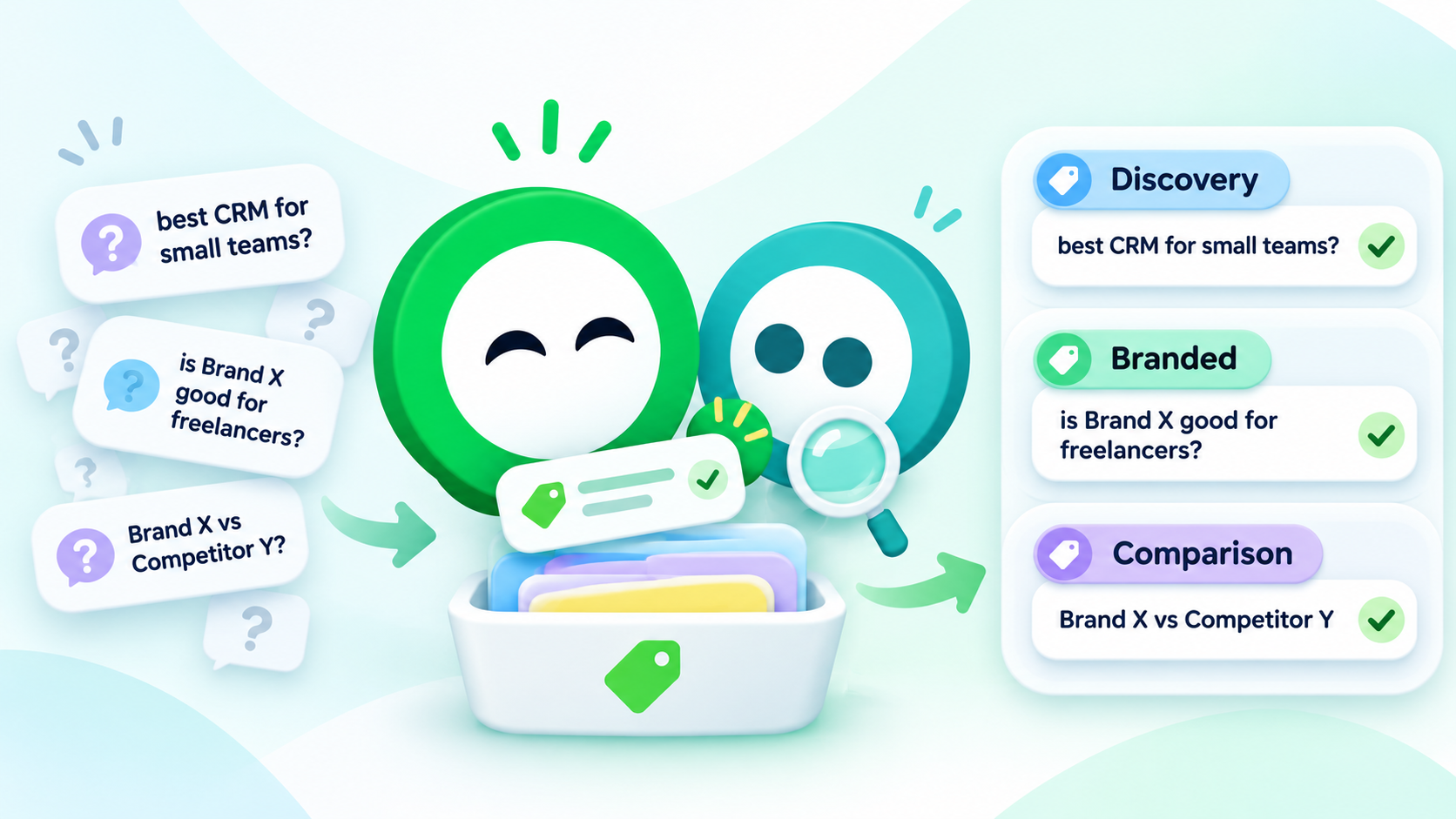
Keep discovery, branded and comparison questions separate so you can understand the different types of visibility.
Step 4: Compare the answers across AI engines
Check where your brand appears, how it's described and which competitors receive stronger recommendations.
Look at the cited sources too.
Sometimes the interesting part isn't that your competitor made the list. It's discovering which publications, comparison pages or other sources repeatedly appear alongside those answers.
This is where a tool like keenOly can help.
Oly tracks the prompts your buyers might ask, examines AI answers across supported engines and helps you investigate competitors, citations and changes over time.
Oly doesn't replace ChatGPT's official analytics or automatically receive its private Insights data.
Oly helps you explore a different part of the story.
Step 5: Turn what you learn into action
Perhaps your brand receives plenty of ChatGPT references but rarely appears in important discovery questions.
Maybe competitors dominate the sources used in your category.
Or perhaps your product information is outdated in third-party articles.
Those findings give you something useful to investigate.
You might need to improve a product page, clarify your positioning, correct inaccurate information or pursue more relevant industry coverage.
You can also measure your competitive position using AI share of voice.
The goal isn't to collect more numbers for the sake of it.
It's to understand which actions deserve your attention.
8. What if OpenAI makes Business Hub much more powerful?
There's one more thing worth considering.
Business Hub is still in beta.
OpenAI has said it plans to expand its business tools to more markets, categories and organizations with more complex needs.
That could eventually include more sophisticated analytics.
If native reporting becomes substantially more comprehensive, independent AI visibility platforms may face greater competition.
That's a real possibility.
But it also highlights what independent platforms will need to do well.
Simply counting mentions probably won't be enough.
Businesses will want to understand the differences between engines, interpret competitive results, investigate source patterns and identify practical improvements.
And those capabilities will need to be genuinely useful, not just another collection of charts.
For GEO platforms, the opportunity is to help marketers make sense of increasingly available AI data.
For businesses, the opportunity is to stop guessing quite so much about their presence in AI search.
Both developments would be welcome.
The numbers are a start. The questions come next.
OpenAI giving businesses access to official ChatGPT analytics is an important development.
You can now see more about how your business appears within ChatGPT, keep certain details up to date and explore how people engage with your website through the platform.
That's progress.
But knowing your website received 500 references doesn't automatically tell you whether your brand is winning the recommendations that matter.
It doesn't tell you why a competitor keeps appearing instead.
And it certainly doesn't tell you what's happening across every other AI engine.
Those are different questions, and they deserve a closer look.
Fortunately, asking questions is one of Oly's favorite things. 💚
Start with the numbers. Then follow the story behind them.
Curious where your brand appears, who's making the shortlist instead and which sources deserve a closer look?
Let Oly investigate your AI visibility.
Your first 10 ChatGPT prompts are free, along with 10 questions you can ask Oly about the results.