โ† Blog

Which AI Search Prompts Should You Track? How to Find the Questions Your Buyers Actually Ask

Your AI visibility score might look impressive, but are you tracking the questions your buyers actually ask? Learn how to choose meaningful AI search prompts, separate brand awareness from discovery and build a better monitoring strategy.

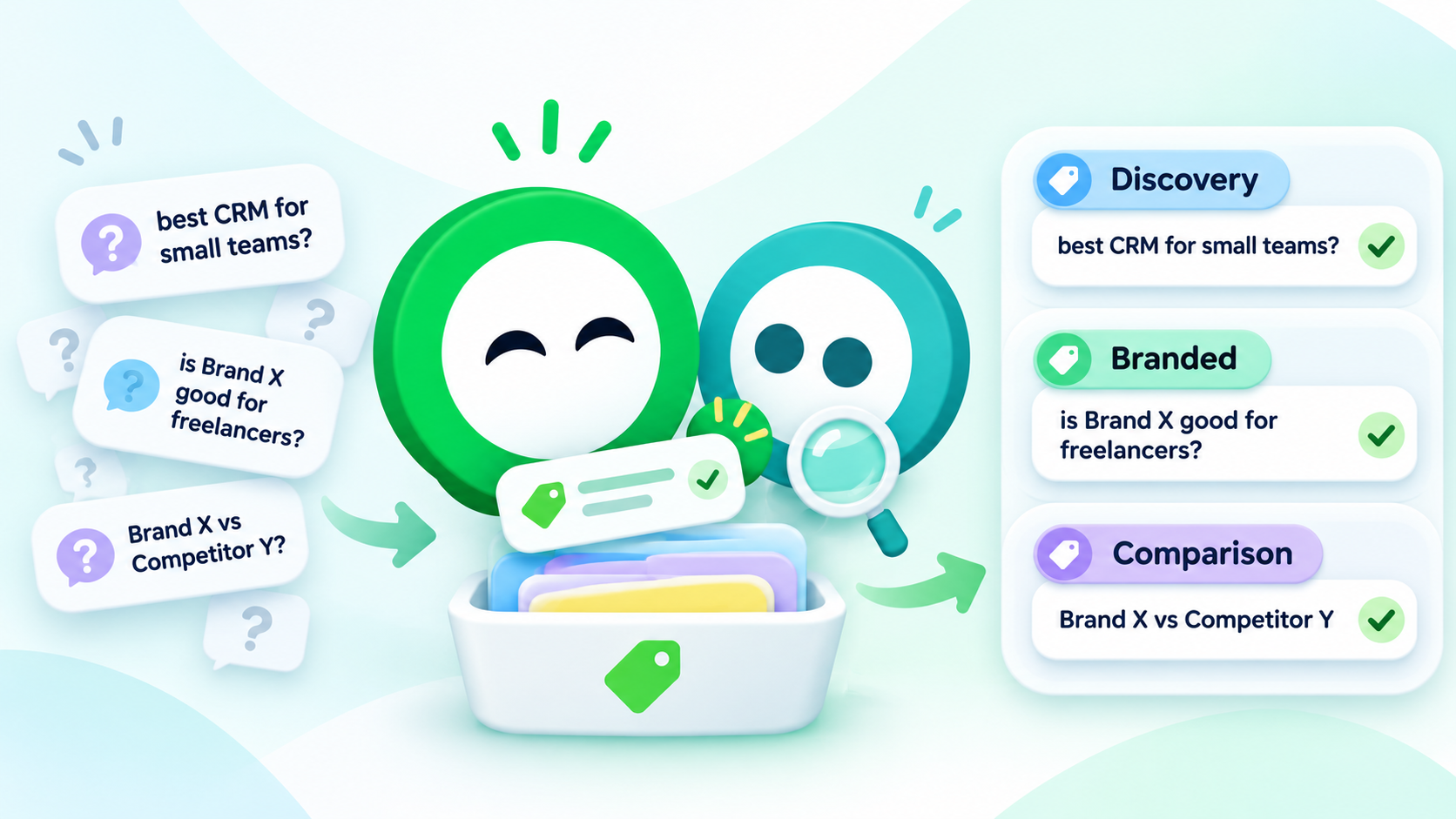
Green and teal Oly mascots organizing AI search prompts into Discovery, Branded and Comparison categories to help businesses track AI visibility.

There's a rather inconvenient problem with AI visibility reports.

You can have an impressive score and still be almost invisible to new customers.

How?

By tracking questions that already mention your brand.

Ask ChatGPT whether your company is good at something, and you've already given it a pretty big clue about which company to discuss.

Take your brand name out of the question, though, and the shortlist might look very different.

That's not a small distinction.

It's the difference between someone who already knows you exist and someone who's still deciding which businesses are worth considering.

And if you're only measuring the first group, you might be celebrating a visibility score that tells you very little about the second.

Oly likes a good score as much as anyone. But Oly is also rather keen on knowing how that score was earned. ๐Ÿ’š

So before adding another 50 questions to your AI monitoring dashboard, let's work out which ones are actually worth asking.

What is AI search prompt tracking?

AI search prompt tracking is the process of monitoring how your brand appears when AI engines answer a selected set of questions relevant to your business.

Those questions are called prompts.

For example, a traditional SEO keyword might be:

"small business CRM"

A corresponding AI search prompt could be:

"Which CRM would you recommend for a small sales team that needs email integration and doesn't have a dedicated IT department?"

Both concern CRM software, but the second reveals considerably more about the buyer's situation.

It introduces the size of the business, the features that matter and a practical constraint.

And those details can change which products an AI assistant recommends.

Unlike conventional keyword rank tracking, AI prompt tracking examines generated answers. You might record whether your brand appears, whether it's recommended, which competitors are included and what sources the answer cites.

The important part is choosing questions that represent relevant buyer needs.

Otherwise, you're measuring how AI responds to your questions, not necessarily how visible your business is to the people you want to reach.

Why branded prompts can make your AI visibility look better than it is

There's some useful research behind this.

In September 2026, Searchable analyzed ChatGPT responses to branded and category prompts.

Across its tracked dataset, brands appeared in 82.9% of responses to prompts that named them, compared with 15.3% of responses to unbranded category prompts.

That's quite a difference.

The analysis covered 379,602 responses to branded prompts and more than 1.8 million responses to category prompts between September 23 and 29, 2026.

These figures describe Searchable's dataset, not the likelihood that any particular business will appear in ChatGPT.

Still, they demonstrate why prompt selection matters.

Consider two questions:

Branded: "Is [your brand] a good CRM for small businesses?"

Unbranded: "What CRM software would you recommend for a small business with ten employees?"

The first tests what AI knows and says about your business.

The second tests whether your business comes to mind when someone needs a solution.

Both are useful.

But they shouldn't be treated as interchangeable measures of discovery.

If most of your tracked questions mention your brand, your visibility report may look reassuring even when competitors dominate broader recommendations.

And that's a rather expensive misunderstanding if you're using those numbers to make marketing decisions.

Step 1: Find out what your customers actually want to know

The best AI prompts don't begin with a clever prompt-writing exercise.

They begin with your customers.

What are people trying to solve? What makes them hesitate before buying? Which alternatives do they compare? What questions come up repeatedly during sales conversations?

You probably already have more useful material than you realize.

Start with the questions your business already receives

Look at sales calls, customer support tickets, live chat conversations, demo requests and frequently asked questions.

A CRM company's sales team might regularly hear:

"Can we move our contacts over from spreadsheets without losing anything?"

That's a useful starting point for an AI prompt about easy CRM migration.

Likewise, a customer asking whether a product integrates with QuickBooks signals an important feature requirement.

These questions are particularly valuable because they come from actual customer interactions, not assumptions about what buyers might care about.

Use your SEO and advertising data

Google Search Console can reveal relevant search queries and topics that already bring people to your website.

Google Ads search terms can provide additional clues about commercial intent.

For example, the keyword "CRM for contractors" might inspire a more specific AI prompt:

"Which CRM tools work well for a small contracting business that needs to manage leads and follow up on quotes?"

You're using search behavior to identify the underlying need, then translating it into a question worth monitoring.

Just be careful about one thing.

Google search queries are not a record of what people are asking ChatGPT.

They're useful research inputs, not proof that buyers are using those exact words in AI conversations.

Look beyond your own website

Competitor reviews, product comparisons, industry forums and community discussions can reveal questions your sales team doesn't hear.

Pay particular attention to complaints and tradeoffs.

Someone saying "Salesforce is too complicated for our tiny team" is giving you a potential prompt about simpler alternatives.

Someone comparing two products because of pricing is revealing a different decision point.

Collect these ideas before worrying about perfect wording.

At this stage, you're looking for buyer intent, not trying to write the world's most sophisticated ChatGPT question.

Step 2: Separate Discovery, Branded and Comparison prompts

Not every AI prompt measures the same thing.

At keenOly, we distinguish between Discovery, Branded and Comparison questions because each reveals something different about your visibility.

Prompt typeExampleWhat it reveals
DiscoveryWhich CRM tools are best for small sales teams?Whether AI introduces your brand without being prompted
BrandedIs [your brand] suitable for a growing sales team?How AI describes and evaluates your brand
ComparisonHow does [your brand] compare with HubSpot?How AI positions your brand against alternatives

You can then explore specific buyer needs within those categories.

Problem-based prompts focus on something the customer wants to fix.

"What software can help us stop losing track of sales leads?"

Alternatives prompts look for other options.

"What are some simpler alternatives to Salesforce for a small business?"

These are useful variations of buyer intent, but they don't always need to become entirely separate reporting categories.

A problem-based question that doesn't mention any brand is still testing discovery. An alternatives question names a competitor, so its results should be interpreted differently from a completely unbranded category question.

The goal is to understand what each question measures.

Keep branded visibility separate from unbranded discovery performance, and label competitor-led comparisons clearly.

Otherwise, your overall score can become a rather confusing mixture of brand awareness, discovery and competitive positioning.

Step 3: Choose prompts that could actually influence a buying decision

Here's an easy trap to fall into.

You discover dozens of possible prompts and decide to track all of them.

More data must mean better analysis, right?

Not necessarily.

Some questions will be too broad. Others will be almost identical. And a few might be interesting without being particularly relevant to someone who could buy from you.

A better approach is to score each candidate prompt against three questions.

CriterionAsk yourself
Business relevanceDoes this question relate closely to something we actually sell?
Buyer intentCould the answer influence a purchase, shortlist or evaluation?
ActionabilityIf our brand is missing, would we know what to investigate?

Give each criterion a score from 1 to 3.

A prompt scoring 8 or 9 out of 9 is a strong candidate. One scoring 3 or 4 probably needs a rethink.

This is a simple prioritization method, not a scientific measure of AI search demand.

For example:

"What is customer relationship management?"

It's relevant to a CRM business, but fairly broad and educational.

Compare that with:

"Which CRM tools are affordable for a ten-person sales team and integrate with Gmail?"

Now there's a recognizable buyer, a budget concern and a practical requirement.

If your CRM doesn't appear, you have something specific to investigate.

That doesn't mean informational prompts are worthless. Some are important for awareness and early research.

It means you should choose them deliberately rather than filling your tracking list with questions simply because they contain your industry's keywords.

Step 4: Build your first 10 AI search prompts

Let's make this practical.

We'll use a US company selling CRM software to small businesses.

The company wants to understand whether AI recommends it to businesses that need something affordable, straightforward and easy to implement.

Here are ten prompts it could start tracking.

#Prompt typeQuestion
1DiscoveryWhich CRM tools work well for a small sales team?
2DiscoveryWhat CRM would you recommend for a company moving away from spreadsheets?
3DiscoveryWhich CRM platforms are suitable for businesses with fewer than 20 employees?
4DiscoveryWhat's an easy CRM to set up without a dedicated IT team?
5Problem-based discoveryWhich CRM can help us manage leads from email and website enquiries?
6Problem-based discoveryWhat CRM software can automate follow-ups for a small business?
7ComparisonHow do HubSpot and Zoho CRM compare for a small business?
8ComparisonWhich CRM offers useful automation without becoming too expensive?
9AlternativesWhat are some simpler alternatives to Salesforce for a small business?
10BrandedIs [your CRM brand] suitable for a growing sales team?

These are illustrative questions, not a dataset of actual ChatGPT conversations.

Notice what's missing.

We're not asking ChatGPT ten variations of "Why is our CRM the best?"

That might be flattering. It wouldn't be especially informative.

Instead, the prompts explore different reasons a customer might consider buying CRM software.

Some are about company size. Others concern integrations, affordability, setup complexity or alternatives.

A few might reveal competitors the company hadn't considered important.

And only one prompt directly names the company's own brand.

That gives the business a useful starting point for investigating discovery without confusing it with branded perception.

Are ten prompts enough?

Enough to begin learning, yes. Enough to describe your entire market with confidence, no.

A comprehensive tracking program may need multiple questions per topic, different buyer segments and repeated observations.

But ten thoughtfully chosen prompts can tell you much more than a hundred questions selected without a clear purpose.

That's also why keenOly's free scan starts with 10 ChatGPT prompts and lets you ask 10 questions to Oly about the results.

It's a starting point for curiosity, not the final word on your brand's AI visibility.

Step 5: Test your prompts across different AI engines

Once you've built your list, the next question is where to run it.

ChatGPT is an obvious place to start.

But it's not the only place your customers might be asking questions.

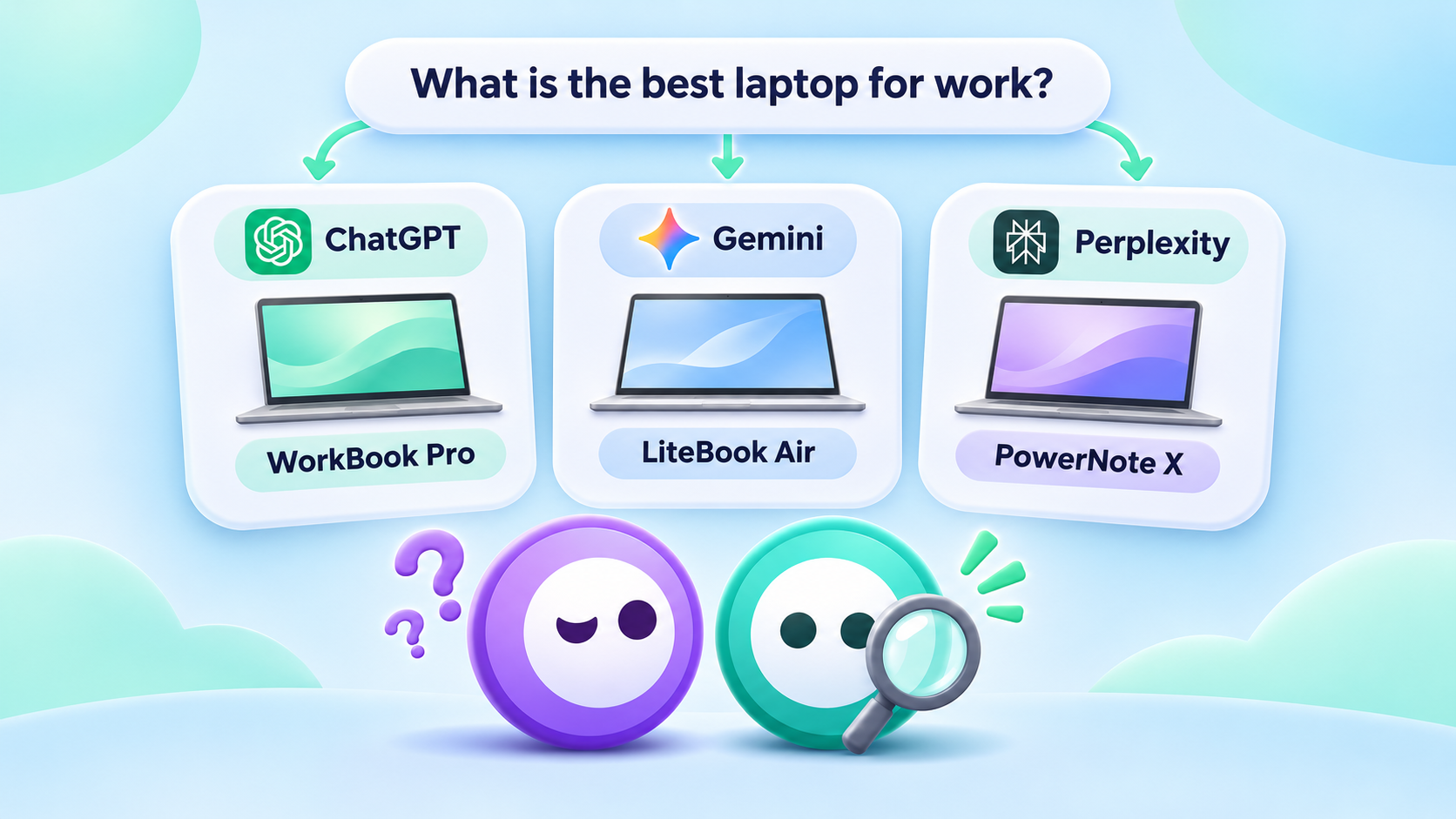
Gemini, Perplexity, Microsoft Copilot, Google AI Mode and Google AI Overviews can surface different brands, descriptions and sources.

A business recommended in one engine might be completely absent from another.

So, where the platform supports the type of question you're investigating, test a consistent set of prompts across the engines relevant to your audience.

Keep a record of:

  • The exact prompt wording
  • The AI engine and date of the test
  • The target country and language
  • Whether your brand appears
  • Which competitors appear
  • Whether your brand is recommended or merely mentioned
  • Any sources or citations worth investigating

Don't read too much into one answer.

AI responses can vary between runs, even when you ask the same question. Search availability, model changes, conversation context and other factors can influence the result.

This is one reason consistent monitoring is more useful than occasionally opening ChatGPT and trying a few questions from memory.

There's another important point here.

A prompt that performs well today isn't necessarily one you'll keep winning tomorrow.

In a 2026 Semrush study of 1,094 US topic categories, only 15.2% met the researchers' definition of having a clear brand leader.

The remaining categories were either led less decisively or had no consistent leader under that methodology.

The lesson isn't that every market is wide open.

It's that appearing in one answer doesn't establish that your brand dominates an entire topic.

You need to look across related questions and observe what happens over time.

The mistakes that make AI visibility reports misleading

We've talked about choosing better prompts. It's worth looking at the habits that can quietly undermine the results.

Tracking mostly branded questions. You'll learn what AI says about you, but much less about whether new customers can discover you.

Asking the same question in six slightly different ways. Similar prompts can have their uses, particularly when testing answer variation, but don't let them crowd out distinct buyer needs.

Choosing questions nobody is likely to ask. A beautifully worded prompt isn't useful if it doesn't reflect a recognizable customer problem.

Treating one answer as a permanent result. AI answers aren't fixed search listings. Repeated observations matter.

Changing your entire prompt list every month. If your questions constantly change, it becomes difficult to tell whether your visibility improved or whether you simply changed what you were measuring.

Mistaking estimated prompt volume for exact customer behavior. Some research platforms estimate AI search demand, but that doesn't mean they can reveal every private question users submit to ChatGPT.

A good approach is to maintain a consistent core set of prompts while reviewing and adding new questions when products, competitors or customer needs change.

And when you update the list, keep track of what changed.

Your future self, staring at a six-month performance chart, will appreciate it.

What if competitors keep appearing and your brand doesn't?

Now we're getting somewhere interesting.

Let's say your CRM appears when you ask ChatGPT about it by name.

But when you ask for simple CRM recommendations for small teams, HubSpot, Zoho and other competitors keep making the shortlist.

Your immediate reaction might be to publish more content containing the phrase "best CRM for small businesses."

I'd investigate a little further first.

Are competitors appearing because AI associates them more strongly with that particular use case?

Are their product pages clearer about setup time, pricing or integrations?

Do relevant comparison websites discuss their strengths more frequently?

Are the same sources being cited across multiple answers?

Or does the result change substantially between AI engines?

These questions help turn a missing mention into something worth investigating.

And that's where Oly gets particularly curious.

keenOly can help you examine tracked prompts, explore related AI questions, compare brand and competitor appearances, and investigate the sources shaping those answers.

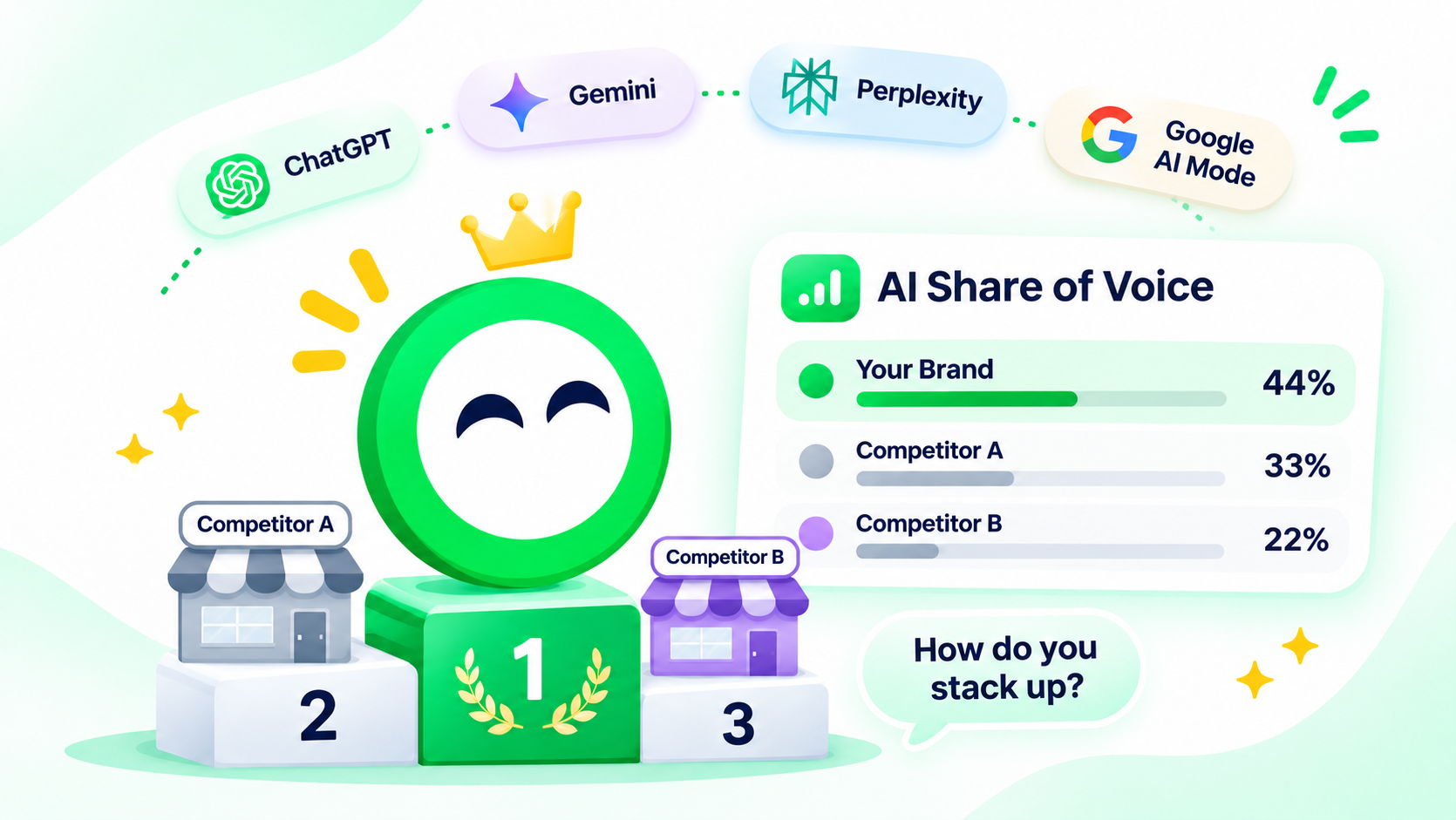
If you want to go deeper into the measurement itself, our guide to AI Share of Voice explains how to compare your brand's presence with competitors.

And if source visibility looks like part of the problem, there's our guide to getting your website cited by AI.

The important thing is not to assume every missing mention has the same cause.

Sometimes the answer is content. Sometimes it's positioning. Sometimes you're simply measuring a question that isn't particularly relevant to your business.

The prompt itself deserves scrutiny too.

Frequently asked questions about AI search prompts

How many AI prompts should a business track?

Start with a manageable set covering your most important buyer questions. Ten prompts can provide an initial view, but a comprehensive program may need multiple prompts per topic, different customer segments and repeated testing.

Quality and coverage matter more than simply having a large list.

Are AI search prompts the same as SEO keywords?

Not quite. SEO keywords often represent short search queries or topics, while AI tracking prompts are complete questions designed to test how an AI engine responds to a particular buyer need.

Keyword research is a useful way to discover topics, but the prompts themselves should reflect realistic questions and decisions.

Can you see the exact questions people ask ChatGPT about your brand?

Not generally. Businesses don't have universal access to the private conversations people have with ChatGPT.

AI visibility monitoring typically uses selected representative prompts to investigate how a brand appears in relevant answers. Those results shouldn't be presented as a complete record of actual customer conversations.

Should you track branded or unbranded AI prompts?

Both, but separately.

Branded prompts help you understand how AI describes your company when someone already knows its name. Unbranded discovery prompts help you investigate whether AI introduces your business to someone exploring the category.

Mixing the two without distinction can make overall visibility scores misleading.

Better questions make better AI visibility decisions

There's no prize for tracking the most AI prompts.

And there isn't much value in a beautiful dashboard if the questions behind it aren't relevant to your buyers.

Start with the problems customers actually have. Work out which questions could influence their decisions. Separate discovery from branded perception. Then check what happens across AI engines and over time.

You'll probably find a few uncomfortable gaps.

You might also discover opportunities you weren't looking for.

Either way, you'll have a better idea of what your visibility numbers really mean.

Because before asking whether your brand is winning in AI search, it's worth checking whether you're asking the right questions.

And if you're curious which questions might reveal a little more about your brand, Oly would be delighted to investigate. ๐Ÿ’š

Let Oly take a look.

Start with 10 free ChatGPT prompts and 10 questions to Oly. Find out where your brand appears, who makes the shortlist instead, and which answers deserve a closer look.
Which AI Search Prompts Should You Track? How to Find the Questions Your Buyers Actually Ask

Your AI visibility score might look impressive, but are you tracking the questions your buyers actually ask? Learn how to choose meaningful AI search prompts, separate brand awareness from discovery and build a better monitoring strategy.

There's a rather inconvenient problem with AI visibility reports.

You can have an impressive score and still be almost invisible to new customers.

How?

By tracking questions that already mention your brand.

Ask ChatGPT whether your company is good at something, and you've already given it a pretty big clue about which company to discuss.

Take your brand name out of the question, though, and the shortlist might look very different.

That's not a small distinction.

It's the difference between someone who already knows you exist and someone who's still deciding which businesses are worth considering.

And if you're only measuring the first group, you might be celebrating a visibility score that tells you very little about the second.

Oly likes a good score as much as anyone. But Oly is also rather keen on knowing how that score was earned. ๐Ÿ’š

So before adding another 50 questions to your AI monitoring dashboard, let's work out which ones are actually worth asking.

What is AI search prompt tracking?

AI search prompt tracking is the process of monitoring how your brand appears when AI engines answer a selected set of questions relevant to your business.

Those questions are called prompts.

For example, a traditional SEO keyword might be:

"small business CRM"

A corresponding AI search prompt could be:

"Which CRM would you recommend for a small sales team that needs email integration and doesn't have a dedicated IT department?"

Both concern CRM software, but the second reveals considerably more about the buyer's situation.

It introduces the size of the business, the features that matter and a practical constraint.

And those details can change which products an AI assistant recommends.

Unlike conventional keyword rank tracking, AI prompt tracking examines generated answers. You might record whether your brand appears, whether it's recommended, which competitors are included and what sources the answer cites.

The important part is choosing questions that represent relevant buyer needs.

Otherwise, you're measuring how AI responds to your questions, not necessarily how visible your business is to the people you want to reach.

Why branded prompts can make your AI visibility look better than it is

There's some useful research behind this.

In September 2026, Searchable analyzed ChatGPT responses to branded and category prompts.

Across its tracked dataset, brands appeared in 82.9% of responses to prompts that named them, compared with 15.3% of responses to unbranded category prompts.

That's quite a difference.

The analysis covered 379,602 responses to branded prompts and more than 1.8 million responses to category prompts between September 23 and 29, 2026.

These figures describe Searchable's dataset, not the likelihood that any particular business will appear in ChatGPT.

Still, they demonstrate why prompt selection matters.

Consider two questions:

Branded: "Is [your brand] a good CRM for small businesses?"

Unbranded: "What CRM software would you recommend for a small business with ten employees?"

The first tests what AI knows and says about your business.

The second tests whether your business comes to mind when someone needs a solution.

Both are useful.

But they shouldn't be treated as interchangeable measures of discovery.

If most of your tracked questions mention your brand, your visibility report may look reassuring even when competitors dominate broader recommendations.

And that's a rather expensive misunderstanding if you're using those numbers to make marketing decisions.

Step 1: Find out what your customers actually want to know

The best AI prompts don't begin with a clever prompt-writing exercise.

They begin with your customers.

What are people trying to solve? What makes them hesitate before buying? Which alternatives do they compare? What questions come up repeatedly during sales conversations?

You probably already have more useful material than you realize.

Start with the questions your business already receives

Look at sales calls, customer support tickets, live chat conversations, demo requests and frequently asked questions.

A CRM company's sales team might regularly hear:

"Can we move our contacts over from spreadsheets without losing anything?"

That's a useful starting point for an AI prompt about easy CRM migration.

Likewise, a customer asking whether a product integrates with QuickBooks signals an important feature requirement.

These questions are particularly valuable because they come from actual customer interactions, not assumptions about what buyers might care about.

Use your SEO and advertising data

Google Search Console can reveal relevant search queries and topics that already bring people to your website.

Google Ads search terms can provide additional clues about commercial intent.

For example, the keyword "CRM for contractors" might inspire a more specific AI prompt:

"Which CRM tools work well for a small contracting business that needs to manage leads and follow up on quotes?"

You're using search behavior to identify the underlying need, then translating it into a question worth monitoring.

Just be careful about one thing.

Google search queries are not a record of what people are asking ChatGPT.

They're useful research inputs, not proof that buyers are using those exact words in AI conversations.

Look beyond your own website

Competitor reviews, product comparisons, industry forums and community discussions can reveal questions your sales team doesn't hear.

Pay particular attention to complaints and tradeoffs.

Someone saying "Salesforce is too complicated for our tiny team" is giving you a potential prompt about simpler alternatives.

Someone comparing two products because of pricing is revealing a different decision point.

Collect these ideas before worrying about perfect wording.

At this stage, you're looking for buyer intent, not trying to write the world's most sophisticated ChatGPT question.

Step 2: Separate Discovery, Branded and Comparison prompts

Not every AI prompt measures the same thing.

At keenOly, we distinguish between Discovery, Branded and Comparison questions because each reveals something different about your visibility.

Prompt typeExampleWhat it reveals
DiscoveryWhich CRM tools are best for small sales teams?Whether AI introduces your brand without being prompted
BrandedIs [your brand] suitable for a growing sales team?How AI describes and evaluates your brand
ComparisonHow does [your brand] compare with HubSpot?How AI positions your brand against alternatives

You can then explore specific buyer needs within those categories.

Problem-based prompts focus on something the customer wants to fix.

"What software can help us stop losing track of sales leads?"

Alternatives prompts look for other options.

"What are some simpler alternatives to Salesforce for a small business?"

These are useful variations of buyer intent, but they don't always need to become entirely separate reporting categories.

A problem-based question that doesn't mention any brand is still testing discovery. An alternatives question names a competitor, so its results should be interpreted differently from a completely unbranded category question.

The goal is to understand what each question measures.

Keep branded visibility separate from unbranded discovery performance, and label competitor-led comparisons clearly.

Otherwise, your overall score can become a rather confusing mixture of brand awareness, discovery and competitive positioning.

Step 3: Choose prompts that could actually influence a buying decision

Here's an easy trap to fall into.

You discover dozens of possible prompts and decide to track all of them.

More data must mean better analysis, right?

Not necessarily.

Some questions will be too broad. Others will be almost identical. And a few might be interesting without being particularly relevant to someone who could buy from you.

A better approach is to score each candidate prompt against three questions.

CriterionAsk yourself
Business relevanceDoes this question relate closely to something we actually sell?
Buyer intentCould the answer influence a purchase, shortlist or evaluation?
ActionabilityIf our brand is missing, would we know what to investigate?

Give each criterion a score from 1 to 3.

A prompt scoring 8 or 9 out of 9 is a strong candidate. One scoring 3 or 4 probably needs a rethink.

This is a simple prioritization method, not a scientific measure of AI search demand.

For example:

"What is customer relationship management?"

It's relevant to a CRM business, but fairly broad and educational.

Compare that with:

"Which CRM tools are affordable for a ten-person sales team and integrate with Gmail?"

Now there's a recognizable buyer, a budget concern and a practical requirement.

If your CRM doesn't appear, you have something specific to investigate.

That doesn't mean informational prompts are worthless. Some are important for awareness and early research.

It means you should choose them deliberately rather than filling your tracking list with questions simply because they contain your industry's keywords.

Step 4: Build your first 10 AI search prompts

Let's make this practical.

We'll use a US company selling CRM software to small businesses.

The company wants to understand whether AI recommends it to businesses that need something affordable, straightforward and easy to implement.

Here are ten prompts it could start tracking.

#Prompt typeQuestion
1DiscoveryWhich CRM tools work well for a small sales team?
2DiscoveryWhat CRM would you recommend for a company moving away from spreadsheets?
3DiscoveryWhich CRM platforms are suitable for businesses with fewer than 20 employees?
4DiscoveryWhat's an easy CRM to set up without a dedicated IT team?
5Problem-based discoveryWhich CRM can help us manage leads from email and website enquiries?
6Problem-based discoveryWhat CRM software can automate follow-ups for a small business?
7ComparisonHow do HubSpot and Zoho CRM compare for a small business?
8ComparisonWhich CRM offers useful automation without becoming too expensive?
9AlternativesWhat are some simpler alternatives to Salesforce for a small business?
10BrandedIs [your CRM brand] suitable for a growing sales team?

These are illustrative questions, not a dataset of actual ChatGPT conversations.

Notice what's missing.

We're not asking ChatGPT ten variations of "Why is our CRM the best?"

That might be flattering. It wouldn't be especially informative.

Instead, the prompts explore different reasons a customer might consider buying CRM software.

Some are about company size. Others concern integrations, affordability, setup complexity or alternatives.

A few might reveal competitors the company hadn't considered important.

And only one prompt directly names the company's own brand.

That gives the business a useful starting point for investigating discovery without confusing it with branded perception.

Are ten prompts enough?

Enough to begin learning, yes. Enough to describe your entire market with confidence, no.

A comprehensive tracking program may need multiple questions per topic, different buyer segments and repeated observations.

But ten thoughtfully chosen prompts can tell you much more than a hundred questions selected without a clear purpose.

That's also why keenOly's free scan starts with 10 ChatGPT prompts and lets you ask 10 questions to Oly about the results.

It's a starting point for curiosity, not the final word on your brand's AI visibility.

Step 5: Test your prompts across different AI engines

Once you've built your list, the next question is where to run it.

ChatGPT is an obvious place to start.

But it's not the only place your customers might be asking questions.

Gemini, Perplexity, Microsoft Copilot, Google AI Mode and Google AI Overviews can surface different brands, descriptions and sources.

A business recommended in one engine might be completely absent from another.

So, where the platform supports the type of question you're investigating, test a consistent set of prompts across the engines relevant to your audience.

Keep a record of:

  • The exact prompt wording
  • The AI engine and date of the test
  • The target country and language
  • Whether your brand appears
  • Which competitors appear
  • Whether your brand is recommended or merely mentioned
  • Any sources or citations worth investigating

Don't read too much into one answer.

AI responses can vary between runs, even when you ask the same question. Search availability, model changes, conversation context and other factors can influence the result.

This is one reason consistent monitoring is more useful than occasionally opening ChatGPT and trying a few questions from memory.

There's another important point here.

A prompt that performs well today isn't necessarily one you'll keep winning tomorrow.

In a 2026 Semrush study of 1,094 US topic categories, only 15.2% met the researchers' definition of having a clear brand leader.

The remaining categories were either led less decisively or had no consistent leader under that methodology.

The lesson isn't that every market is wide open.

It's that appearing in one answer doesn't establish that your brand dominates an entire topic.

You need to look across related questions and observe what happens over time.

The mistakes that make AI visibility reports misleading

We've talked about choosing better prompts. It's worth looking at the habits that can quietly undermine the results.

Tracking mostly branded questions. You'll learn what AI says about you, but much less about whether new customers can discover you.

Asking the same question in six slightly different ways. Similar prompts can have their uses, particularly when testing answer variation, but don't let them crowd out distinct buyer needs.

Choosing questions nobody is likely to ask. A beautifully worded prompt isn't useful if it doesn't reflect a recognizable customer problem.

Treating one answer as a permanent result. AI answers aren't fixed search listings. Repeated observations matter.

Changing your entire prompt list every month. If your questions constantly change, it becomes difficult to tell whether your visibility improved or whether you simply changed what you were measuring.

Mistaking estimated prompt volume for exact customer behavior. Some research platforms estimate AI search demand, but that doesn't mean they can reveal every private question users submit to ChatGPT.

A good approach is to maintain a consistent core set of prompts while reviewing and adding new questions when products, competitors or customer needs change.

And when you update the list, keep track of what changed.

Your future self, staring at a six-month performance chart, will appreciate it.

What if competitors keep appearing and your brand doesn't?

Now we're getting somewhere interesting.

Let's say your CRM appears when you ask ChatGPT about it by name.

But when you ask for simple CRM recommendations for small teams, HubSpot, Zoho and other competitors keep making the shortlist.

Your immediate reaction might be to publish more content containing the phrase "best CRM for small businesses."

I'd investigate a little further first.

Are competitors appearing because AI associates them more strongly with that particular use case?

Are their product pages clearer about setup time, pricing or integrations?

Do relevant comparison websites discuss their strengths more frequently?

Are the same sources being cited across multiple answers?

Or does the result change substantially between AI engines?

These questions help turn a missing mention into something worth investigating.

And that's where Oly gets particularly curious.

keenOly can help you examine tracked prompts, explore related AI questions, compare brand and competitor appearances, and investigate the sources shaping those answers.

If you want to go deeper into the measurement itself, our guide to AI Share of Voice explains how to compare your brand's presence with competitors.

And if source visibility looks like part of the problem, there's our guide to getting your website cited by AI.

The important thing is not to assume every missing mention has the same cause.

Sometimes the answer is content. Sometimes it's positioning. Sometimes you're simply measuring a question that isn't particularly relevant to your business.

The prompt itself deserves scrutiny too.

Frequently asked questions about AI search prompts

How many AI prompts should a business track?

Start with a manageable set covering your most important buyer questions. Ten prompts can provide an initial view, but a comprehensive program may need multiple prompts per topic, different customer segments and repeated testing.

Quality and coverage matter more than simply having a large list.

Are AI search prompts the same as SEO keywords?

Not quite. SEO keywords often represent short search queries or topics, while AI tracking prompts are complete questions designed to test how an AI engine responds to a particular buyer need.

Keyword research is a useful way to discover topics, but the prompts themselves should reflect realistic questions and decisions.

Can you see the exact questions people ask ChatGPT about your brand?

Not generally. Businesses don't have universal access to the private conversations people have with ChatGPT.

AI visibility monitoring typically uses selected representative prompts to investigate how a brand appears in relevant answers. Those results shouldn't be presented as a complete record of actual customer conversations.

Should you track branded or unbranded AI prompts?

Both, but separately.

Branded prompts help you understand how AI describes your company when someone already knows its name. Unbranded discovery prompts help you investigate whether AI introduces your business to someone exploring the category.

Mixing the two without distinction can make overall visibility scores misleading.

Better questions make better AI visibility decisions

There's no prize for tracking the most AI prompts.

And there isn't much value in a beautiful dashboard if the questions behind it aren't relevant to your buyers.

Start with the problems customers actually have. Work out which questions could influence their decisions. Separate discovery from branded perception. Then check what happens across AI engines and over time.

You'll probably find a few uncomfortable gaps.

You might also discover opportunities you weren't looking for.

Either way, you'll have a better idea of what your visibility numbers really mean.

Because before asking whether your brand is winning in AI search, it's worth checking whether you're asking the right questions.

And if you're curious which questions might reveal a little more about your brand, Oly would be delighted to investigate. ๐Ÿ’š

Let Oly take a look.

Start with 10 free ChatGPT prompts and 10 questions to Oly. Find out where your brand appears, who makes the shortlist instead, and which answers deserve a closer look.
Try keenOly

Start free at app.keenoly.com.