You've written the content. Your website ranks on Google. You've even spent time making sure your articles answer the questions your customers are asking.
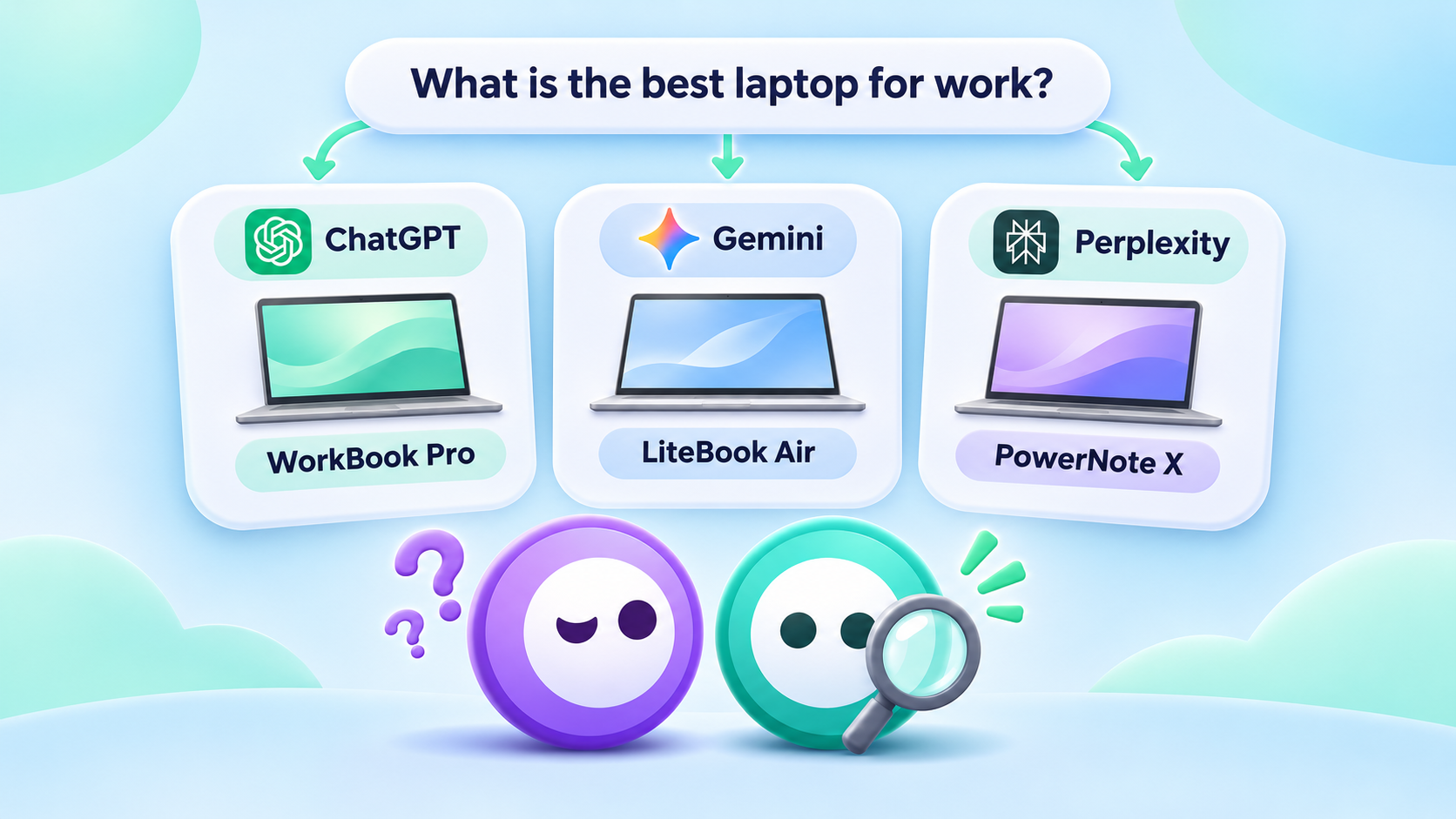
Then someone asks ChatGPT a question about your industry.
And whose website gets cited?
Your competitor's.
A little frustrating, especially when you've covered the same subject on your own website.
So why is AI using their website as a source instead of yours? And is there anything you can actually do about it?
The answer is yes, although perhaps not in the way some GEO advice would have you believe.
You can't guarantee that ChatGPT, Google AI Overviews or Perplexity will cite your website. But you can make your content easier to discover, more useful to reference and better aligned with the questions people are asking.
Here's where to start.
1. First, understand what an AI citation actually means
Let's clear up something that often gets confused.
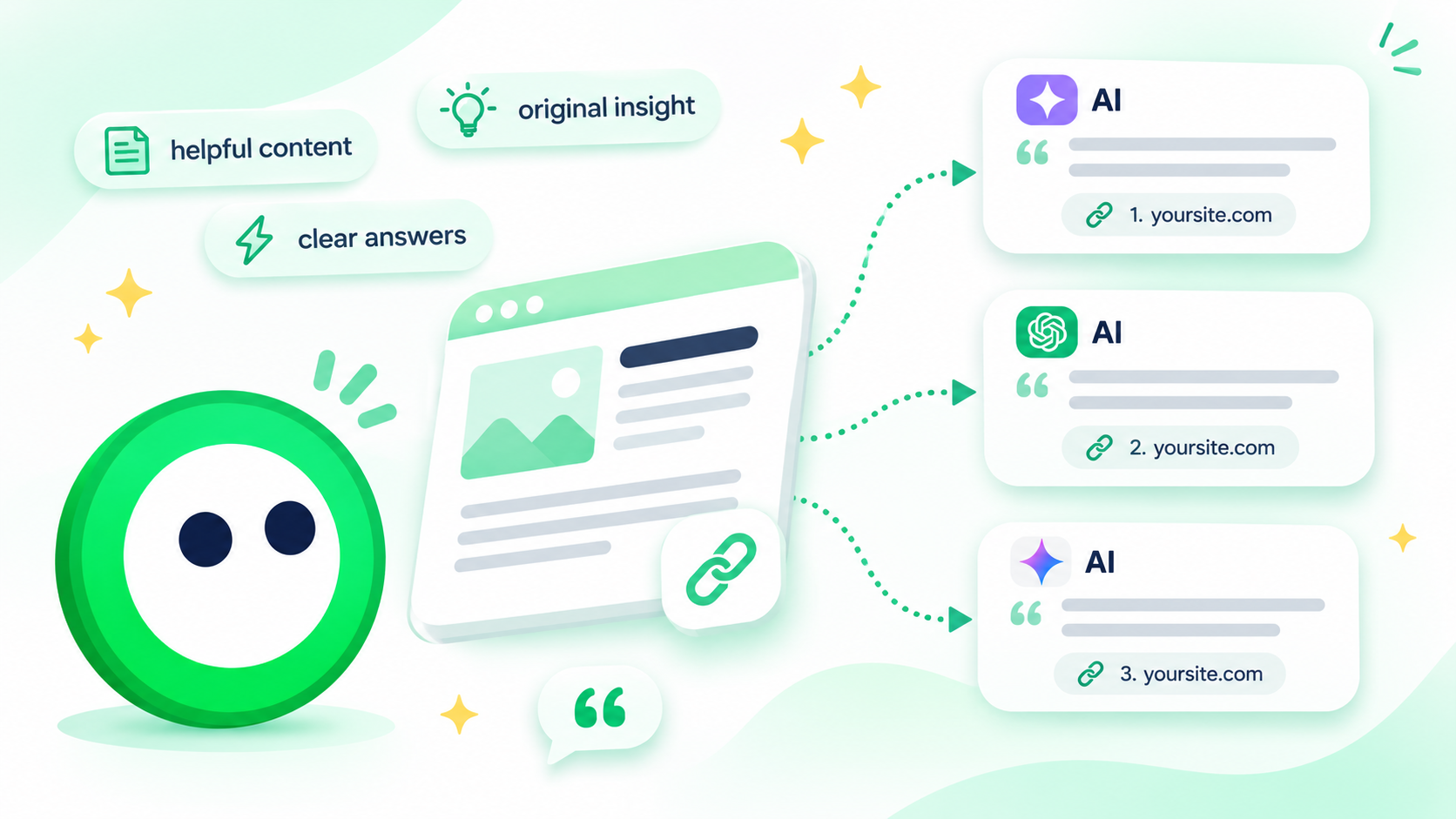
Being mentioned by AI, being recommended by AI and being cited by AI are three different things.
Imagine someone asks ChatGPT:
“What's the best payroll software for a small restaurant in the US?”
The answer might mention five payroll providers, recommend two of them and link to three websites as supporting sources.
Your brand could be one of the recommendations without your website receiving a citation.
Or your website could be cited because it contains useful information about restaurant payroll, even though your company isn't recommended at all.
Here's the difference:
- Brand mention: AI names your company somewhere in its response.
- Brand recommendation: AI presents your company as a suitable or preferred choice.
- Website citation: AI links to a page on your website as a source supporting its answer.
All three can be valuable, but they tell you different things.
For this article, we're interested in the third one: getting your website recognized and linked as a useful source of information.
And that starts with making sure AI search can actually access what you've published.
2. Make sure AI search can access your website
You could have the most useful article in your industry, but if search crawlers can't access it, you've made discovery unnecessarily difficult.
Before changing your content strategy, check the technical basics.
Check your Google indexing
For your website to be eligible as a supporting link in Google AI Overviews or AI Mode, Google says the page must be indexed and eligible to appear in regular Google Search with a snippet.
That means your existing SEO setup still matters.
Start by checking:
- Can Google crawl and index the page?
- Is it accidentally blocked by robots.txt or a noindex directive?
- Can search engines reach it through internal links?
- Is the important information available as readable text?
- Are your canonical tags pointing to the correct pages?
Google Search Console is a useful starting point, particularly its URL Inspection tool.
Google's official guidance for AI features confirms that existing SEO fundamentals remain relevant. There are no additional technical requirements specifically for AI Overviews or AI Mode.
Check access for ChatGPT Search
ChatGPT has a search crawler called OAI-SearchBot.
According to OpenAI's crawler documentation, this bot is used to help surface websites in ChatGPT's search results.
If you want your website to be eligible for discovery through ChatGPT Search, check that OAI-SearchBot isn't being blocked by your robots.txt rules or website security settings.
There's an important distinction here.
OpenAI also operates GPTBot, which is associated with crawling content that may be used to train its models.
The two have different purposes. You can allow OAI-SearchBot for search discovery while disallowing GPTBot for training.
Being accessible to ChatGPT Search doesn't require agreeing to AI model training.
What about Perplexity?
Perplexity also operates a search crawler, called PerplexityBot, which helps its search experience discover and link to websites.
Its official crawler documentation explains how website owners can manage access.
If you're using a firewall or bot protection service, it's also worth checking that legitimate search crawlers aren't being blocked unintentionally.
None of these checks guarantees a citation.
But before wondering why AI isn't linking to your content, it's sensible to make sure your website hasn't accidentally shut the door.
3. Give AI something worth citing
Here's where things get more interesting.
Making your website accessible is the starting point. Giving search systems useful material to work with is the bigger challenge.
Think about the content already available online.
There are thousands of articles explaining what payroll software is, why businesses need accounting software or how digital marketing works.
If your article offers essentially the same information, what makes it worth referencing over everything else?
That's a useful question to ask before publishing another blog.
Generic content versus genuinely useful content
Imagine you run a payroll services company serving restaurants across the United States.
Your website has a page that says:
Our payroll solutions help businesses simplify payroll management, improve efficiency and save valuable time.
Nothing is necessarily wrong with that sentence.
But it doesn't answer many of the questions a restaurant owner might actually have.
Now imagine you publish a guide titled:
How to Choose Payroll Software for a Restaurant With Tipped Employees
Instead of describing your company's benefits, the article explains:
- What restaurant owners should consider when managing tips and payroll.
- Which questions to ask software providers about multi-state payroll requirements.
- How to compare payroll platforms for restaurants with multiple locations.
- Common problems operators encounter when reconciling tips and wages.
- What information to prepare before requesting a payroll software demonstration.
You could also include a genuinely useful comparison checklist based on your team's experience working with restaurants.
Now there's something a reader can use.
And because the content addresses a specific problem in useful detail, it may be a more relevant source when someone asks AI about restaurant payroll.
The aim isn't to write content that sounds like AI wants to read it. It's to publish information that deserves to be referenced.
What makes content more useful?
Consider adding material that provides value beyond a generic explanation:
Original insights and firsthand experience
If you've worked with clients on a particular problem, explain the situations you've encountered, the tradeoffs involved and what businesses should consider.
Useful comparisons
Help readers understand differences between options, including limitations. A balanced comparison is usually more informative than a page insisting your product is the best.
Specific answers
Address the real decisions your audience faces. A question like “How do I choose payroll software for three restaurant locations?” offers a much clearer editorial direction than “The benefits of payroll automation.”
Verifiable information
Support factual claims with credible references. Keep statistics, product information and recommendations accurate and up to date.
Google made this distinction particularly clear in its 2026 guidance on optimizing for generative AI search. It emphasizes unique, valuable content based on genuine knowledge and experience rather than material that simply repeats what's already online.
That's good advice for traditional SEO, too.
4. Don't forget the websites talking about you
Your own website isn't the only place an AI engine might find information about your business.
Independent reviews, comparison articles, industry publications, forums and other third-party websites can appear among the sources used in AI answers.
This creates an interesting situation.
Your competitor might be cited repeatedly, not because its website is technically better than yours, but because relevant external pages discuss its products in greater detail.
That doesn't prove why the engine selected those sources, but it gives you something worth investigating.
Look at who gets cited instead
Suppose you sell software for property management companies.
You check several questions about property management software and discover that the same industry publication keeps appearing as a source.
When you open its articles, you notice that three competing brands are featured in detailed comparisons.
Your company is barely mentioned.
You haven't necessarily discovered the exact reason AI overlooked your website. But you have discovered a gap in the information available to potential buyers.
That's useful.
You could investigate whether your business belongs in that publication's coverage, whether your product information is easy to find and whether you have genuinely relevant insights worth sharing with its readers.
The goal is to improve your brand's presence in credible sources, not manufacture mentions.
Paid placements disguised as independent recommendations, fake reviews and artificial backlinks aren't a sustainable shortcut to AI visibility.
And don't assume that every citation represents an endorsement. Sometimes a source is simply being used to establish a fact, explain a concept or provide background information.
5. ChatGPT, Google AI Overviews and Perplexity won't always cite the same sources
It would certainly make life easier if every AI engine worked exactly the same way.
Unfortunately, it doesn't.
The systems differ in how they retrieve information, assemble answers and display supporting links.
ChatGPT Search
ChatGPT Search can retrieve web information and provide links to sources.
Whether your website appears depends on the question, the available information and how the search experience assembles its response.
Allowing OAI-SearchBot helps with search eligibility, but it doesn't guarantee that your page will be selected.
Google AI Overviews and AI Mode
Google's generative AI search features use Google's search infrastructure to retrieve information.
Google explains that AI Overviews and AI Mode may perform multiple related searches to help answer complex questions. It calls this process query fan-out.
For example, a question about choosing payroll software might involve related searches about pricing, integrations, compliance features and business size.
The sources displayed can differ between AI Overviews and AI Mode, even for similar questions.
Perplexity
Perplexity's search experience also retrieves information from the web and provides links to supporting sources.
However, appearing as a source in Perplexity doesn't mean the same page will appear in ChatGPT Search or Google AI Overviews.
So there's no single citation result you can use as a measure of your performance everywhere.
A page might be cited by Perplexity, overlooked by ChatGPT and appear in Google AI Mode for a related question.
That's why checking only one engine can leave you with an incomplete picture.
6. How to check whether your changes are making a difference
Improving your content is one part of the process.
The other is finding out what actually changes.
Otherwise, you could spend weeks updating articles, improving website pages and pursuing relevant coverage without knowing whether your citation visibility has moved at all.
You don't need a complicated setup to begin.
Start with a small set of buyer questions
Choose five to ten questions that are relevant to your business.
Include discovery questions that don't name your company, along with more specific comparison or problem-solving questions.
For example:
“What payroll software works best for restaurants with multiple locations?”
“How do small US restaurants manage payroll for tipped employees?”
“Which payroll platforms support restaurants operating across different states?”
Record the sources, not just the answers
For each prompt, check the AI engines you're interested in.
Save the date, the question, the response and any cited URLs.
Then look at three things:
- Is your own website cited?
- Which competing websites or third-party sources appear?
- Does your brand get mentioned or recommended, even when your website isn't cited?
That last distinction matters.
Your brand could gain visibility without your own website receiving a link. Equally, your article could earn a citation without your product receiving a recommendation.
Those are different outcomes.
A simple citation investigation example
Imagine you operate a fictional payroll platform for US restaurants.
You check three AI engines using the same buyer question.
Here's what the results might look like:
ChatGPT: Mentions your company but cites an independent industry comparison rather than your website.
Google AI Overview: Links to a competitor's guide about restaurant payroll requirements.
Perplexity: Cites an article from your website that explains how restaurant payroll works across multiple states.
What have you learned?
Your website is earning a citation in one engine, while other sources are appearing elsewhere.
That doesn't automatically mean your website needs a complete overhaul.
It gives you a starting point. You can compare the cited pages, inspect what information they provide and decide whether your own content is missing something useful.
Repeat the checks on a consistent schedule, and you'll begin seeing which sources appear regularly and which results change.
Remember that AI answers can vary even when the question stays the same. One new citation isn't proof that an optimization worked.
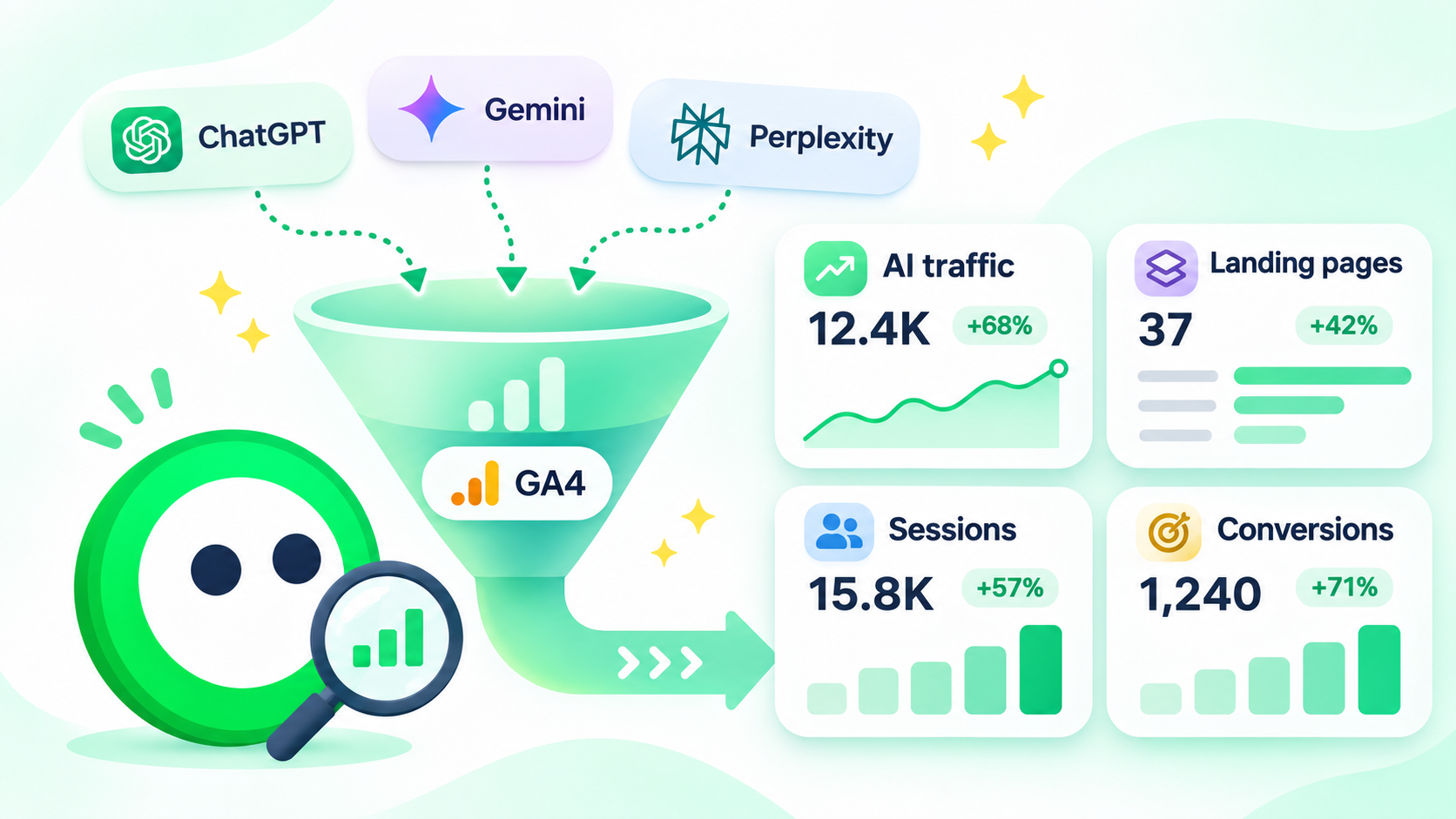
Use Google Search Console as well
Google introduced dedicated Generative AI performance reports in Search Console in June 2026, with worldwide availability announced by August 31, 2026.
These reports provide visibility data for generative AI features, including impressions and the pages appearing in those experiences.
They're useful for understanding your website's presence in Google's AI search features alongside your broader search performance.
You can read Google's official announcement here.
For more detailed monitoring of individual AI answers and citations, a tool like keenOly can help.
Oly keeps track of your prompts, examines the answers and follows the cited sources, so you can investigate where your website appears, what competitors are getting cited and how those results change.
You still decide what action makes sense. Oly helps you find the parts worth looking into.
7. AI citation checklist: What should you do first?
If you're wondering where to begin, here's a practical checklist.
- Check accessibility. Confirm that your important pages can be crawled and that the relevant AI search crawlers aren't being blocked unintentionally.
- Review your existing content. Identify pages that explain what you do without answering the questions buyers actually ask.
- Add something genuinely useful. Include firsthand experience, original insights, relevant comparisons or practical guidance.
- Make information easy to find. Use clear headings, descriptive page titles, useful internal links and readable content.
- Review external sources. Investigate credible publications, review websites and comparison pages discussing your category.
- Check AI citations directly. Record which pages ChatGPT, Google and Perplexity cite for relevant buyer questions.
- Monitor changes over time. Compare consistent checks before concluding that a particular improvement made a difference.
A few GEO shortcuts you can safely stop worrying about
Before you get buried in another list of AI optimization hacks, it's worth knowing what Google's official guidance actually says.
For Google Search, you don't need a special AI schema, tiny content chunks or an llms.txt file to qualify for generative AI search features.
An llms.txt file may serve a purpose for other systems, but Google says it doesn't use the file as a special signal for its search rankings or AI features.
That doesn't mean technical SEO is irrelevant. Quite the opposite.
It means the fundamentals still deserve your attention.
And while AEO, GEO and AI search optimization are useful ways to describe this emerging area of marketing, none is a substitute for publishing genuinely helpful information.
The goal isn't just to get cited. It's to be worth citing.
There's no magic instruction that makes ChatGPT, Google or Perplexity choose your website.
But there are sensible things you can do.
Make your website accessible. Publish information that's genuinely useful. Understand where competitors are earning visibility. And keep checking what AI actually references when people ask questions about your industry.
Some improvements might help your pages become more discoverable. Others might make your content more valuable to the people reading it, regardless of whether an AI engine ever cites it.
Both are worth pursuing.
And if you're curious about who's getting cited while your website is missing from the conversation?
Well, Oly is curious too. 💚
Let Oly take a look.
Start with a free keenOly AI visibility scan and find out where your brand appears, who shows up instead and which sources are shaping the answers.