โ† Blog

How to Find and Fix AI Search Content Gaps (2026 Guide)

Your competitors keep appearing in AI answers. Your brand doesn't. Learn how to find content and citation gaps, understand what's missing and make changes that actually matter.

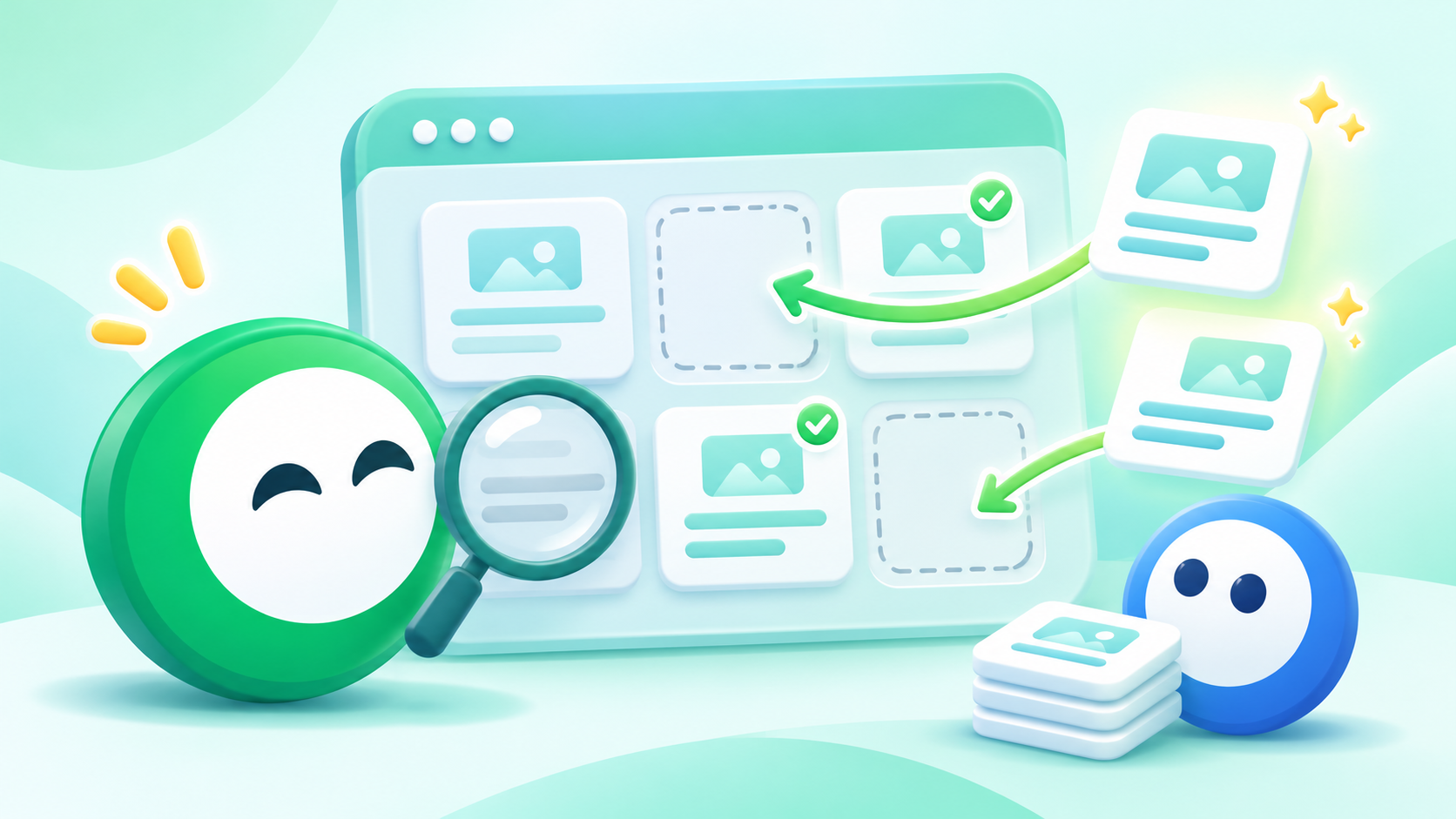
Curious Oly examines missing content cards on an AI search dashboard while a blue Oly helps identify content gaps.

Your competitors keep making the AI shortlist. Your brand doesn't.

So, naturally, someone suggests publishing more content.

Another blog. Another FAQ page. Perhaps a few more mentions of "best" and "industry leading" scattered across the website.

Oly has a question before we do any of that. ๐Ÿ‘€

What exactly is missing?

Because an AI engine overlooking your brand doesn't automatically mean you need more content. Perhaps you haven't answered an important buyer question. Maybe a competitor has better supporting evidence. Or an industry publication that keeps getting cited hasn't covered your business.

Those are three very different problems. Publishing another generic article won't necessarily solve any of them.

That's why AI search content gap analysis is becoming an important part of Generative Engine Optimization (GEO) and Answer Engine Optimization (AEO).

The goal isn't to produce more pages for AI to read. It's to understand why your brand isn't appearing in relevant answers, then decide which changes are actually worth making.

What is an AI search content gap?

An AI search content gap is a missing, incomplete or insufficiently supported piece of information that may be limiting your brand's relevance or visibility in AI generated answers.

It could be a customer question your website doesn't address, a product capability you haven't explained properly or a comparison where competitors have stronger supporting information.

But here's an important distinction: not every AI visibility gap is a content gap.

If ChatGPT recommends your competitor instead of you, the missing recommendation is something you can observe. The reason behind it still needs investigating.

Traditional SEO content gap analysis usually starts with keywords your competitors rank for and your website doesn't.

AI search gap analysis starts with the questions people ask and the answers AI engines produce.

Traditional SEO gap analysisAI search gap analysis
Which keywords do competitors rank for?Which buyer questions lead AI to recommend competitors?
Which pages attract organic search traffic?Which brands appear in AI answers, and how are they described?
Which topics are missing from our website?Which information, evidence or sources might be missing?
How do our Google rankings compare?How does our visibility compare across AI engines?
What content could improve organic visibility?What changes could improve our relevance, representation or citation opportunities?

The two approaches belong together. Strong SEO foundations still matter, but a keyword ranking report alone won't tell you why an AI assistant keeps putting another brand on its shortlist.

Five reasons AI might overlook your brand

A missing recommendation can have several explanations. Identifying the right one is where the useful work begins.

1. You're missing from the questions buyers actually ask

Your website might perform well for broad searches such as "project management software."

But what happens when someone asks:

"What's the best project management software for a small architecture firm managing multiple client projects?"

That question introduces a specific industry, business size and use case.

Perhaps your software is well suited to architecture firms. Unfortunately, your website never says so. Your features are described in general terms, and your customer examples focus on other industries.

That creates a possible gap between what your product can do and what an AI engine can readily establish from the available information.

The useful question isn't simply whether your brand appears in AI search.

It's which commercially relevant questions you keep missing.

If you're unsure which questions to investigate, start with our guide to choosing AI search prompts to track.

2. Your content doesn't answer the full question

You've probably seen a website that promises to help businesses "work smarter, move faster and unlock their potential."

Lovely.

Now, does it integrate with QuickBooks?

Sometimes marketing copy is so busy sounding impressive that it forgets to explain what the product actually does.

AI search questions often contain practical buying criteria: pricing, integrations, compatibility, availability, limitations, implementation requirements and suitability for particular customers.

If those details are buried, missing or scattered across unrelated pages, there's less useful information for search systems to retrieve.

You don't need to turn every page into a technical manual. But your important product and service pages should answer the questions a serious buyer would ask before purchasing.

3. Your competitors appear in sources that barely mention you

This is one of the more revealing gaps.

An AI engine recommends three competitors and cites an industry comparison article. You open the article and discover that your brand isn't included.

Your own website might explain your product perfectly. But the cited publication has no reason to discuss it because the business simply isn't covered.

That's a potential source or citation gap.

In July 2026, Semrush published a guide to AI visibility gaps, distinguishing missing brand mentions, prompts, citations, sources and narrative representation.

The distinction matters.

If a respected industry publication repeatedly appears alongside competitor recommendations, rewriting your homepage may not address the underlying opportunity.

A more sensible action might be to review the publication's inclusion criteria, develop a credible case for coverage or provide genuinely useful information to its editors.

And no, that isn't an invitation to distribute the same promotional paragraph across fifty websites.

4. Your competitors have better evidence

Two businesses can claim to offer excellent customer support.

One has a dedicated support page explaining response times, contact channels and service availability. It also has relevant customer testimonials and documented service commitments.

The other says, "World class support you can trust."

Guess which one gives a prospective buyer more information to evaluate?

The same problem appears with claims about security, performance, integrations and industry expertise.

If you're making a claim, back it up.

That might mean publishing a specific case study, explaining a feature in detail, providing updated documentation or making relevant customer evidence easier to find.

Not every claim needs a research report. But vague promises are a poor substitute for information someone can use.

5. Your content may be difficult to discover

Sometimes the content exists, but search systems cannot access or process it as expected.

Google's official guidance for generative AI search says that pages generally need to be indexed and eligible for search snippets to appear as supporting links in AI Overviews and AI Mode. Sites must also be included in Google's generative AI Search features.

For ChatGPT search, OpenAI advises publishers to allow access to OAI-SearchBot so their content can be discovered and included in summaries and snippets.

Blocked crawlers, indexing problems, inaccessible content and confusing site structures are therefore worth investigating.

But let's not turn technical SEO into a new collection of GEO superstitions.

Google explicitly advises website owners to prioritize established SEO practices over unsupported tricks such as creating special AI text files purely for visibility.

Fix what's genuinely broken. Don't invent problems to keep everyone busy.

How to find content gaps in ChatGPT and other AI engines

Now for the practical part.

You don't need to begin with hundreds of prompts. In fact, a smaller set of meaningful questions will often reveal more than an enormous list of searches nobody can explain.

Start with buying questions, not just keywords

Choose questions that reflect the way someone might evaluate your category.

Include broad discovery questions, specific use cases, purchase requirements and comparisons between alternatives.

For a software company, you might investigate questions about pricing, integrations, industry suitability, implementation time and alternatives to established competitors.

Keep prompts that explicitly mention your brand separate from those that don't.

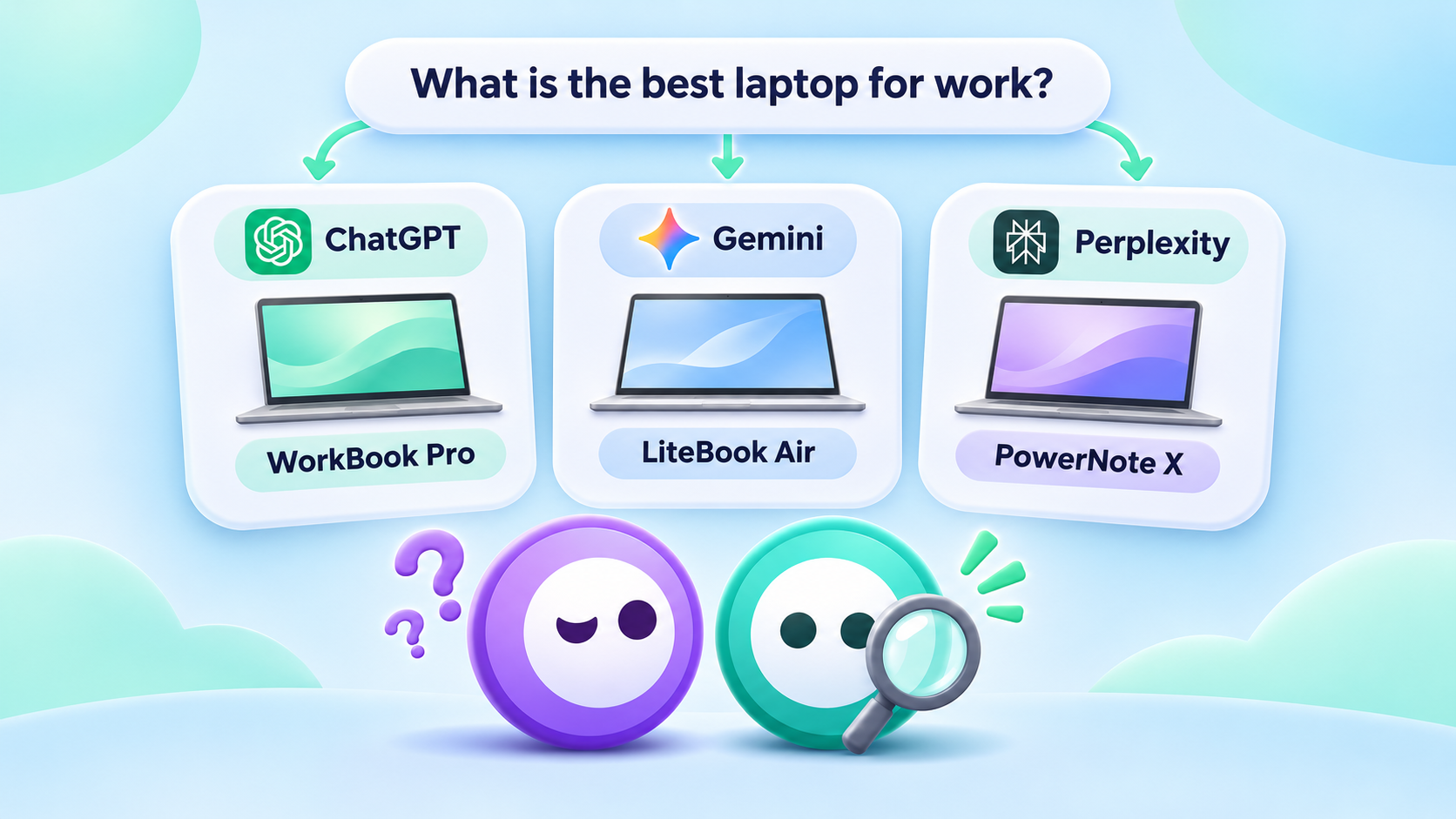
If ChatGPT answers "Is Brand X a good choice?" by discussing Brand X, that doesn't establish that it would independently recommend Brand X to someone exploring the category.

Oly likes knowing the difference.

Check which competitors keep appearing

Run those prompts across the AI engines relevant to your market.

Record which brands appear, whether they're actually recommended, how they're described and which sources are cited.

Repeat important checks rather than treating one answer as a permanent verdict.

AI responses can change, and different AI engines can recommend different brands even when asked the same question.

What you're looking for is a pattern.

For example, does one competitor consistently appear in questions about small businesses while your brand mostly appears in questions about larger companies?

That could reveal a positioning or content opportunity worth investigating.

Read the sources, not just the recommendations

This is where a lot of marketers stop too early.

They see that a competitor has been recommended and immediately add the prompt to their next content brief.

Instead, open the supporting sources where available.

Look at the product details, comparisons, reviews or articles that appear alongside the answer. Check whether they contain information your website lacks.

Some cited pages may already mention your brand. Others may omit it entirely.

Also remember that a visible citation doesn't necessarily reveal every influence behind an AI response. Treat sources as evidence worth investigating, not a complete explanation of a proprietary model's decision.

Compare the answers with what your website actually says

Once you've identified a recurring gap, review the relevant pages on your own website.

Do they answer the buyer's question clearly? Is the information current? Can a visitor easily find your pricing, product capabilities and limitations?

If the information is present but vague, you may need an update.

If it's missing entirely, you may have found a genuinely useful content opportunity.

And if your website already explains everything perfectly, perhaps the problem lies elsewhere.

That's precisely why diagnosis comes before drafting.

A practical example: Why AI recommends another brand

Consider a fictional US software business offering project management tools for professional services firms.

The company wants to appear when buyers ask:

"What's the best project management software for a small architecture firm?"

Across several test runs, the marketing team observes competing products being recommended more frequently.

After reviewing the answers and available sources, they identify several possible reasons.

What the team discoversWhat it could meanSensible next action
Competitors have dedicated architecture industry pagesTheir suitability for this use case is easier to establishImprove the existing industry page or create one if genuinely needed
Competitor reviews discuss design approvals and project milestonesBuyers have specific workflow requirementsExplain relevant workflows with actual product examples
An industry comparison article doesn't include the businessPotential third-party source gapInvestigate whether the product qualifies for independent coverage
The website claims several integrations without naming themImportant product information is unclearPublish an accurate, maintained integration list
The software lacks a feature that buyers frequently requestThe problem may be product fit rather than marketingRaise the issue with the product team

Illustrative scenario, not actual keenOly scan data.

The most useful finding might be the last one.

Sometimes AI recommends a competitor because that competitor genuinely satisfies the buyer's requirements more closely.

That's not a content gap you can solve by writing a more enthusiastic headline.

It's a product insight.

Good GEO should be capable of telling you something you don't particularly want to hear.

Should you create a new blog or improve an existing page?

Not every missing recommendation deserves a new article.

I'd argue that many businesses have enough content already. What they lack is clear, convincing information in the places customers expect to find it.

If your product page doesn't explain an important capability, improve the product page.

If your services are relevant to a particular industry but that expertise is difficult to establish, strengthen the appropriate service or industry page.

If customers repeatedly ask how your software works with another platform, publish practical integration documentation.

And if buyers genuinely need independent comparisons, a transparent comparison page or useful editorial article may be appropriate.

The decision should follow the problem.

Here's a useful rule: improve an existing page when the information belongs there. Create a new one when the question deserves its own substantial answer.

Whatever you choose, make the content worth reading.

Google's 2026 generative AI search guidance emphasizes original, valuable information and established SEO foundations. It doesn't recommend producing repetitive pages or manufacturing mentions simply to influence AI answers.

A hundred near identical GEO pages won't become a better strategy just because you've given the spreadsheet a new name.

How to prioritize AI content gaps that actually matter

Finding twenty gaps doesn't mean you should fix twenty gaps this month.

Some represent commercial opportunities. Others are interesting but unlikely to change anything meaningful.

Start by asking how closely each gap relates to your customers and their decisions.

A missing recommendation for "best accounting software for a US construction company" could matter considerably to a software provider serving that market.

A missing mention in a broad question about the history of accounting software? Probably less urgent.

Then consider how consistently the gap appears, how strong the competitor advantage is and whether you have evidence of an issue you can reasonably address.

Finally, think about effort.

Updating a well performing product page to explain an existing integration might be relatively straightforward. Securing independent coverage from an established industry publication could take considerably longer.

A simple priority framework is:

Business relevance ร— strength of the observed gap ร— realistic opportunity for improvement.

Use this as a decision guide rather than pretending there's a scientifically precise score for every possible content change.

The point is to stop treating every missing AI mention as equally important.

How do you know whether your GEO changes worked?

Publishing the improvement is only half the job.

You need to check whether anything changed.

Keep a consistent set of prompts and record your visibility before making updates. Then monitor those same questions over time, using comparable settings and repeated checks.

Look for changes in:

  • Discovery Visibility: Does your brand appear more often in relevant questions that don't name it?
  • Branded Perception: Is AI describing your business accurately and recognizing its actual strengths?
  • Competitive Win Rate: How frequently does your brand make the shortlist relative to competitors?
  • Sources and citations: Are relevant pages being cited, and have the sources appearing alongside recommendations changed?

Don't confuse being mentioned with being recommended. And don't treat a higher citation count as automatic proof of increased sales.

There are useful supporting tools, too. For example, Bing Webmaster Tools introduced AI Performance reporting in 2026, providing information about content citations in supported AI experiences.

That can help you understand how your pages are being used as sources. It doesn't replace tracking the brand recommendations customers actually receive.

One more thing: even if your visibility improves after an update, that doesn't prove the update caused the improvement. Models, sources and competitor information change.

Look for sustained patterns, not instant victories.

Oly has a few ideas about those missing recommendations

Here's where we'd like the workflow to become a little less exhausting.

You shouldn't have to spend Monday collecting AI answers, Tuesday comparing spreadsheets and Wednesday trying to remember why you wanted to rewrite that service page.

keenOly helps connect those steps.

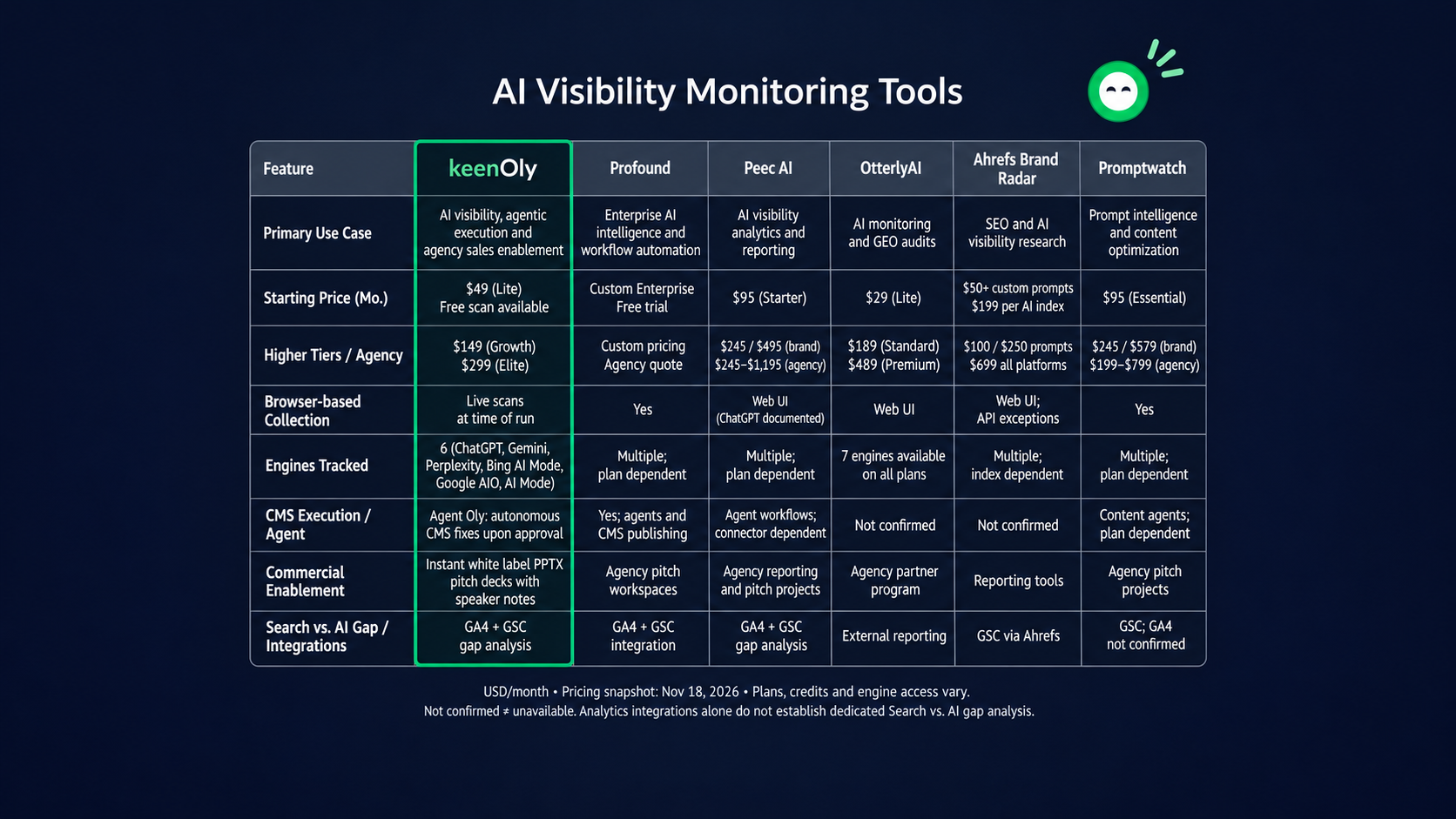
It monitors your brand across six AI search engines, showing where you're visible, where competitors appear instead and which sources are associated with the answers.

You can investigate individual prompts, explore related AI questions and compare performance across Discovery Visibility, Branded Perception and Competitive Win Rate.

Then there's Agent Oly.

Oly can investigate visibility and citation gaps, identify opportunities for improvement and help develop relevant content. For supported CMS workflows, Oly can also carry out changes once you've reviewed and approved them.

The idea isn't to automate the publication of another fifty blogs.

It's to make the next useful change easier to identify and execute.

Because knowing that your competitor keeps getting recommended is interesting.

Knowing what to investigate next is considerably more useful.

And knowing whether your changes made a difference? Now we're getting somewhere. ๐Ÿ’š

Before you publish another article, ask what's missing

The next time an AI engine recommends your competitor instead of your business, resist the urge to immediately add another blog to the calendar.

Find out which questions your brand is missing from. Look at the information and evidence behind the recommendations. Check whether you have a content problem, a citation opportunity, a technical issue or simply a product that isn't the best match for that particular buyer.

Then decide what deserves your attention.

That's a much more useful starting point for an AI search content strategy than publishing more content and hoping something sticks.

Oly is keen to know what's missing from your AI story.

Start with a free keenOly scan, including 10 ChatGPT prompts and 10 questions to Oly. When you're ready to look further, explore your visibility across six AI engines and turn the gaps you discover into your next actions.

Frequently asked questions

What is AI search content gap analysis?

AI search content gap analysis is the process of identifying missing or insufficient information that may affect how AI engines represent, cite or recommend a business. It involves reviewing buyer prompts, competitor recommendations, sources and existing website content to identify opportunities for improvement.

Why does ChatGPT recommend my competitors instead of my business?

Possible reasons include differences in product suitability, available information, third-party coverage, source retrieval and how a question is interpreted. Comparing repeated answers and their supporting sources can help identify potential gaps, but the exact reason for a recommendation isn't always visible.

How is AI search content gap analysis different from SEO keyword gap analysis?

SEO keyword gap analysis focuses on search terms competitors rank for and your website doesn't. AI search content gap analysis examines the questions buyers ask AI, which brands are recommended, how they're described and the information supporting those responses. Both approaches can inform the same content strategy.

Can updating existing website content improve AI visibility?

It can create better opportunities for your content to be discovered, retrieved and used in relevant answers, particularly when the updates improve accuracy, usefulness or accessibility. However, no individual content change guarantees a brand mention, citation or recommendation.

Do I need to create separate content for ChatGPT, Gemini and Perplexity?

Not necessarily. Accurate, useful content and strong technical SEO foundations can benefit visibility across multiple platforms. Differences in how engines retrieve information and recommend brands may reveal specific gaps worth addressing, but creating duplicate pages for each engine is generally not a sensible starting point.

How often should I check my AI search content gaps?

Regular monitoring is more useful than relying on one manual search. The appropriate frequency depends on your market, content activity and resources. Keep a consistent set of commercially relevant prompts, compare results over time and investigate meaningful changes rather than reacting to every variation in an AI answer.

How to Find and Fix AI Search Content Gaps (2026 Guide)

Your competitors keep appearing in AI answers. Your brand doesn't. Learn how to find content and citation gaps, understand what's missing and make changes that actually matter.

Your competitors keep making the AI shortlist. Your brand doesn't.

So, naturally, someone suggests publishing more content.

Another blog. Another FAQ page. Perhaps a few more mentions of "best" and "industry leading" scattered across the website.

Oly has a question before we do any of that. ๐Ÿ‘€

What exactly is missing?

Because an AI engine overlooking your brand doesn't automatically mean you need more content. Perhaps you haven't answered an important buyer question. Maybe a competitor has better supporting evidence. Or an industry publication that keeps getting cited hasn't covered your business.

Those are three very different problems. Publishing another generic article won't necessarily solve any of them.

That's why AI search content gap analysis is becoming an important part of Generative Engine Optimization (GEO) and Answer Engine Optimization (AEO).

The goal isn't to produce more pages for AI to read. It's to understand why your brand isn't appearing in relevant answers, then decide which changes are actually worth making.

What is an AI search content gap?

An AI search content gap is a missing, incomplete or insufficiently supported piece of information that may be limiting your brand's relevance or visibility in AI generated answers.

It could be a customer question your website doesn't address, a product capability you haven't explained properly or a comparison where competitors have stronger supporting information.

But here's an important distinction: not every AI visibility gap is a content gap.

If ChatGPT recommends your competitor instead of you, the missing recommendation is something you can observe. The reason behind it still needs investigating.

Traditional SEO content gap analysis usually starts with keywords your competitors rank for and your website doesn't.

AI search gap analysis starts with the questions people ask and the answers AI engines produce.

Traditional SEO gap analysisAI search gap analysis
Which keywords do competitors rank for?Which buyer questions lead AI to recommend competitors?
Which pages attract organic search traffic?Which brands appear in AI answers, and how are they described?
Which topics are missing from our website?Which information, evidence or sources might be missing?
How do our Google rankings compare?How does our visibility compare across AI engines?
What content could improve organic visibility?What changes could improve our relevance, representation or citation opportunities?

The two approaches belong together. Strong SEO foundations still matter, but a keyword ranking report alone won't tell you why an AI assistant keeps putting another brand on its shortlist.

Five reasons AI might overlook your brand

A missing recommendation can have several explanations. Identifying the right one is where the useful work begins.

1. You're missing from the questions buyers actually ask

Your website might perform well for broad searches such as "project management software."

But what happens when someone asks:

"What's the best project management software for a small architecture firm managing multiple client projects?"

That question introduces a specific industry, business size and use case.

Perhaps your software is well suited to architecture firms. Unfortunately, your website never says so. Your features are described in general terms, and your customer examples focus on other industries.

That creates a possible gap between what your product can do and what an AI engine can readily establish from the available information.

The useful question isn't simply whether your brand appears in AI search.

It's which commercially relevant questions you keep missing.

If you're unsure which questions to investigate, start with our guide to choosing AI search prompts to track.

2. Your content doesn't answer the full question

You've probably seen a website that promises to help businesses "work smarter, move faster and unlock their potential."

Lovely.

Now, does it integrate with QuickBooks?

Sometimes marketing copy is so busy sounding impressive that it forgets to explain what the product actually does.

AI search questions often contain practical buying criteria: pricing, integrations, compatibility, availability, limitations, implementation requirements and suitability for particular customers.

If those details are buried, missing or scattered across unrelated pages, there's less useful information for search systems to retrieve.

You don't need to turn every page into a technical manual. But your important product and service pages should answer the questions a serious buyer would ask before purchasing.

3. Your competitors appear in sources that barely mention you

This is one of the more revealing gaps.

An AI engine recommends three competitors and cites an industry comparison article. You open the article and discover that your brand isn't included.

Your own website might explain your product perfectly. But the cited publication has no reason to discuss it because the business simply isn't covered.

That's a potential source or citation gap.

In July 2026, Semrush published a guide to AI visibility gaps, distinguishing missing brand mentions, prompts, citations, sources and narrative representation.

The distinction matters.

If a respected industry publication repeatedly appears alongside competitor recommendations, rewriting your homepage may not address the underlying opportunity.

A more sensible action might be to review the publication's inclusion criteria, develop a credible case for coverage or provide genuinely useful information to its editors.

And no, that isn't an invitation to distribute the same promotional paragraph across fifty websites.

4. Your competitors have better evidence

Two businesses can claim to offer excellent customer support.

One has a dedicated support page explaining response times, contact channels and service availability. It also has relevant customer testimonials and documented service commitments.

The other says, "World class support you can trust."

Guess which one gives a prospective buyer more information to evaluate?

The same problem appears with claims about security, performance, integrations and industry expertise.

If you're making a claim, back it up.

That might mean publishing a specific case study, explaining a feature in detail, providing updated documentation or making relevant customer evidence easier to find.

Not every claim needs a research report. But vague promises are a poor substitute for information someone can use.

5. Your content may be difficult to discover

Sometimes the content exists, but search systems cannot access or process it as expected.

Google's official guidance for generative AI search says that pages generally need to be indexed and eligible for search snippets to appear as supporting links in AI Overviews and AI Mode. Sites must also be included in Google's generative AI Search features.

For ChatGPT search, OpenAI advises publishers to allow access to OAI-SearchBot so their content can be discovered and included in summaries and snippets.

Blocked crawlers, indexing problems, inaccessible content and confusing site structures are therefore worth investigating.

But let's not turn technical SEO into a new collection of GEO superstitions.

Google explicitly advises website owners to prioritize established SEO practices over unsupported tricks such as creating special AI text files purely for visibility.

Fix what's genuinely broken. Don't invent problems to keep everyone busy.

How to find content gaps in ChatGPT and other AI engines

Now for the practical part.

You don't need to begin with hundreds of prompts. In fact, a smaller set of meaningful questions will often reveal more than an enormous list of searches nobody can explain.

Start with buying questions, not just keywords

Choose questions that reflect the way someone might evaluate your category.

Include broad discovery questions, specific use cases, purchase requirements and comparisons between alternatives.

For a software company, you might investigate questions about pricing, integrations, industry suitability, implementation time and alternatives to established competitors.

Keep prompts that explicitly mention your brand separate from those that don't.

If ChatGPT answers "Is Brand X a good choice?" by discussing Brand X, that doesn't establish that it would independently recommend Brand X to someone exploring the category.

Oly likes knowing the difference.

Check which competitors keep appearing

Run those prompts across the AI engines relevant to your market.

Record which brands appear, whether they're actually recommended, how they're described and which sources are cited.

Repeat important checks rather than treating one answer as a permanent verdict.

AI responses can change, and different AI engines can recommend different brands even when asked the same question.

What you're looking for is a pattern.

For example, does one competitor consistently appear in questions about small businesses while your brand mostly appears in questions about larger companies?

That could reveal a positioning or content opportunity worth investigating.

Read the sources, not just the recommendations

This is where a lot of marketers stop too early.

They see that a competitor has been recommended and immediately add the prompt to their next content brief.

Instead, open the supporting sources where available.

Look at the product details, comparisons, reviews or articles that appear alongside the answer. Check whether they contain information your website lacks.

Some cited pages may already mention your brand. Others may omit it entirely.

Also remember that a visible citation doesn't necessarily reveal every influence behind an AI response. Treat sources as evidence worth investigating, not a complete explanation of a proprietary model's decision.

Compare the answers with what your website actually says

Once you've identified a recurring gap, review the relevant pages on your own website.

Do they answer the buyer's question clearly? Is the information current? Can a visitor easily find your pricing, product capabilities and limitations?

If the information is present but vague, you may need an update.

If it's missing entirely, you may have found a genuinely useful content opportunity.

And if your website already explains everything perfectly, perhaps the problem lies elsewhere.

That's precisely why diagnosis comes before drafting.

A practical example: Why AI recommends another brand

Consider a fictional US software business offering project management tools for professional services firms.

The company wants to appear when buyers ask:

"What's the best project management software for a small architecture firm?"

Across several test runs, the marketing team observes competing products being recommended more frequently.

After reviewing the answers and available sources, they identify several possible reasons.

What the team discoversWhat it could meanSensible next action
Competitors have dedicated architecture industry pagesTheir suitability for this use case is easier to establishImprove the existing industry page or create one if genuinely needed
Competitor reviews discuss design approvals and project milestonesBuyers have specific workflow requirementsExplain relevant workflows with actual product examples
An industry comparison article doesn't include the businessPotential third-party source gapInvestigate whether the product qualifies for independent coverage
The website claims several integrations without naming themImportant product information is unclearPublish an accurate, maintained integration list
The software lacks a feature that buyers frequently requestThe problem may be product fit rather than marketingRaise the issue with the product team

Illustrative scenario, not actual keenOly scan data.

The most useful finding might be the last one.

Sometimes AI recommends a competitor because that competitor genuinely satisfies the buyer's requirements more closely.

That's not a content gap you can solve by writing a more enthusiastic headline.

It's a product insight.

Good GEO should be capable of telling you something you don't particularly want to hear.

Should you create a new blog or improve an existing page?

Not every missing recommendation deserves a new article.

I'd argue that many businesses have enough content already. What they lack is clear, convincing information in the places customers expect to find it.

If your product page doesn't explain an important capability, improve the product page.

If your services are relevant to a particular industry but that expertise is difficult to establish, strengthen the appropriate service or industry page.

If customers repeatedly ask how your software works with another platform, publish practical integration documentation.

And if buyers genuinely need independent comparisons, a transparent comparison page or useful editorial article may be appropriate.

The decision should follow the problem.

Here's a useful rule: improve an existing page when the information belongs there. Create a new one when the question deserves its own substantial answer.

Whatever you choose, make the content worth reading.

Google's 2026 generative AI search guidance emphasizes original, valuable information and established SEO foundations. It doesn't recommend producing repetitive pages or manufacturing mentions simply to influence AI answers.

A hundred near identical GEO pages won't become a better strategy just because you've given the spreadsheet a new name.

How to prioritize AI content gaps that actually matter

Finding twenty gaps doesn't mean you should fix twenty gaps this month.

Some represent commercial opportunities. Others are interesting but unlikely to change anything meaningful.

Start by asking how closely each gap relates to your customers and their decisions.

A missing recommendation for "best accounting software for a US construction company" could matter considerably to a software provider serving that market.

A missing mention in a broad question about the history of accounting software? Probably less urgent.

Then consider how consistently the gap appears, how strong the competitor advantage is and whether you have evidence of an issue you can reasonably address.

Finally, think about effort.

Updating a well performing product page to explain an existing integration might be relatively straightforward. Securing independent coverage from an established industry publication could take considerably longer.

A simple priority framework is:

Business relevance ร— strength of the observed gap ร— realistic opportunity for improvement.

Use this as a decision guide rather than pretending there's a scientifically precise score for every possible content change.

The point is to stop treating every missing AI mention as equally important.

How do you know whether your GEO changes worked?

Publishing the improvement is only half the job.

You need to check whether anything changed.

Keep a consistent set of prompts and record your visibility before making updates. Then monitor those same questions over time, using comparable settings and repeated checks.

Look for changes in:

  • Discovery Visibility: Does your brand appear more often in relevant questions that don't name it?
  • Branded Perception: Is AI describing your business accurately and recognizing its actual strengths?
  • Competitive Win Rate: How frequently does your brand make the shortlist relative to competitors?
  • Sources and citations: Are relevant pages being cited, and have the sources appearing alongside recommendations changed?

Don't confuse being mentioned with being recommended. And don't treat a higher citation count as automatic proof of increased sales.

There are useful supporting tools, too. For example, Bing Webmaster Tools introduced AI Performance reporting in 2026, providing information about content citations in supported AI experiences.

That can help you understand how your pages are being used as sources. It doesn't replace tracking the brand recommendations customers actually receive.

One more thing: even if your visibility improves after an update, that doesn't prove the update caused the improvement. Models, sources and competitor information change.

Look for sustained patterns, not instant victories.

Oly has a few ideas about those missing recommendations

Here's where we'd like the workflow to become a little less exhausting.

You shouldn't have to spend Monday collecting AI answers, Tuesday comparing spreadsheets and Wednesday trying to remember why you wanted to rewrite that service page.

keenOly helps connect those steps.

It monitors your brand across six AI search engines, showing where you're visible, where competitors appear instead and which sources are associated with the answers.

You can investigate individual prompts, explore related AI questions and compare performance across Discovery Visibility, Branded Perception and Competitive Win Rate.

Then there's Agent Oly.

Oly can investigate visibility and citation gaps, identify opportunities for improvement and help develop relevant content. For supported CMS workflows, Oly can also carry out changes once you've reviewed and approved them.

The idea isn't to automate the publication of another fifty blogs.

It's to make the next useful change easier to identify and execute.

Because knowing that your competitor keeps getting recommended is interesting.

Knowing what to investigate next is considerably more useful.

And knowing whether your changes made a difference? Now we're getting somewhere. ๐Ÿ’š

Before you publish another article, ask what's missing

The next time an AI engine recommends your competitor instead of your business, resist the urge to immediately add another blog to the calendar.

Find out which questions your brand is missing from. Look at the information and evidence behind the recommendations. Check whether you have a content problem, a citation opportunity, a technical issue or simply a product that isn't the best match for that particular buyer.

Then decide what deserves your attention.

That's a much more useful starting point for an AI search content strategy than publishing more content and hoping something sticks.

Oly is keen to know what's missing from your AI story.

Start with a free keenOly scan, including 10 ChatGPT prompts and 10 questions to Oly. When you're ready to look further, explore your visibility across six AI engines and turn the gaps you discover into your next actions.

Frequently asked questions

What is AI search content gap analysis?

AI search content gap analysis is the process of identifying missing or insufficient information that may affect how AI engines represent, cite or recommend a business. It involves reviewing buyer prompts, competitor recommendations, sources and existing website content to identify opportunities for improvement.

Why does ChatGPT recommend my competitors instead of my business?

Possible reasons include differences in product suitability, available information, third-party coverage, source retrieval and how a question is interpreted. Comparing repeated answers and their supporting sources can help identify potential gaps, but the exact reason for a recommendation isn't always visible.

How is AI search content gap analysis different from SEO keyword gap analysis?

SEO keyword gap analysis focuses on search terms competitors rank for and your website doesn't. AI search content gap analysis examines the questions buyers ask AI, which brands are recommended, how they're described and the information supporting those responses. Both approaches can inform the same content strategy.

Can updating existing website content improve AI visibility?

It can create better opportunities for your content to be discovered, retrieved and used in relevant answers, particularly when the updates improve accuracy, usefulness or accessibility. However, no individual content change guarantees a brand mention, citation or recommendation.

Do I need to create separate content for ChatGPT, Gemini and Perplexity?

Not necessarily. Accurate, useful content and strong technical SEO foundations can benefit visibility across multiple platforms. Differences in how engines retrieve information and recommend brands may reveal specific gaps worth addressing, but creating duplicate pages for each engine is generally not a sensible starting point.

How often should I check my AI search content gaps?

Regular monitoring is more useful than relying on one manual search. The appropriate frequency depends on your market, content activity and resources. Keep a consistent set of commercially relevant prompts, compare results over time and investigate meaningful changes rather than reacting to every variation in an AI answer.
Try keenOly

Start free at app.keenoly.com.