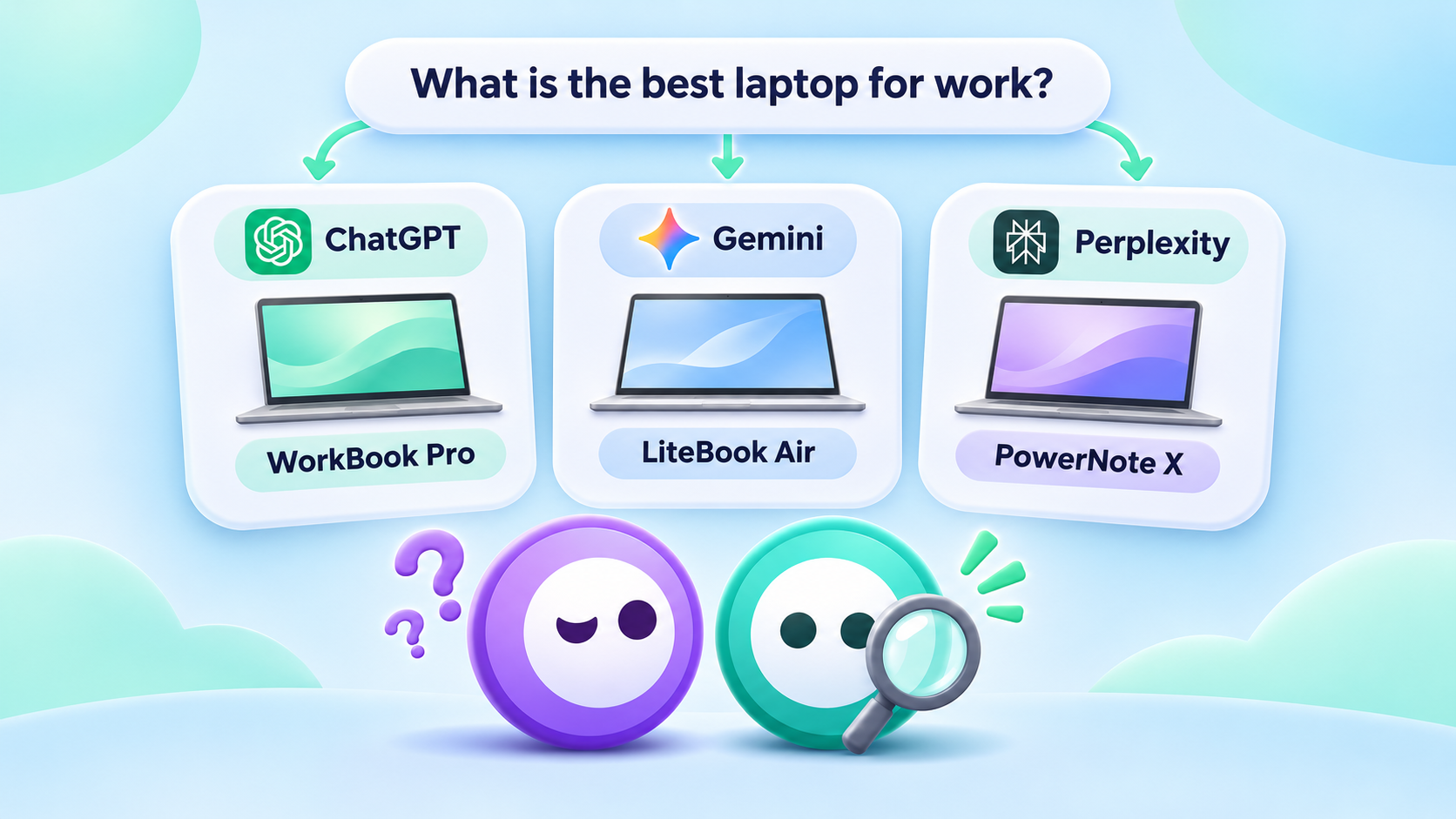
Your brand might be easy to find on Google. But what happens when someone asks ChatGPT to recommend a business like yours? Does your brand make the shortlist, or do your competitors get all the attention?
You don't need to guess. With a few realistic buyer questions and a consistent way to record the answers, you can begin checking where your brand appears, how it's described, and who gets recommended instead.
Here's how to do it.
1. Choose prompts buyers would actually use
Start with questions someone might ask when they're considering a purchase, not polished phrases from your marketing materials.
If you sell accounting software, “What's the best accounting software for contractors?” is more useful than a line copied from your homepage. If you run an agency, someone might ask “Which SEO agencies work with businesses that have multiple locations?”
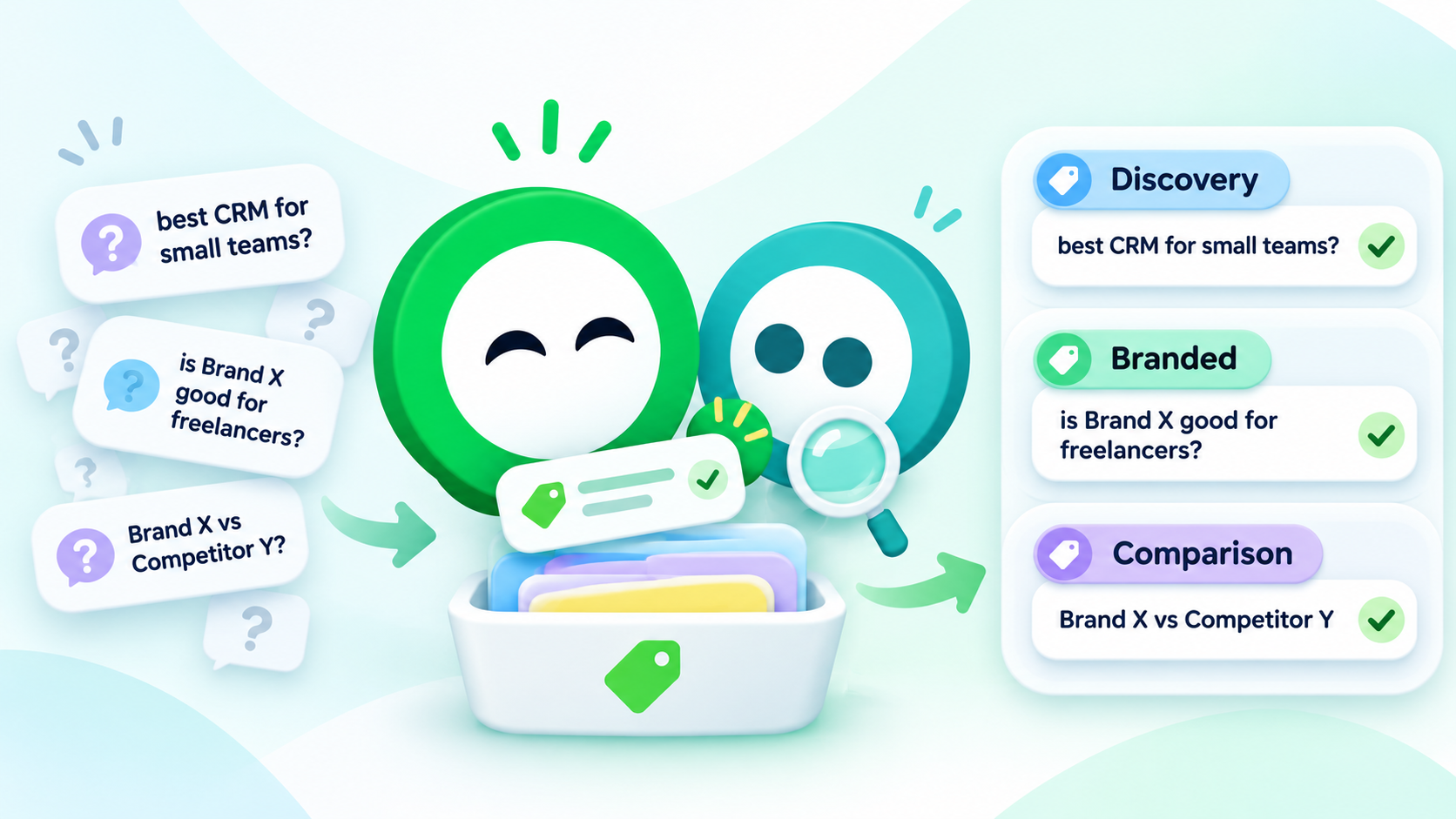
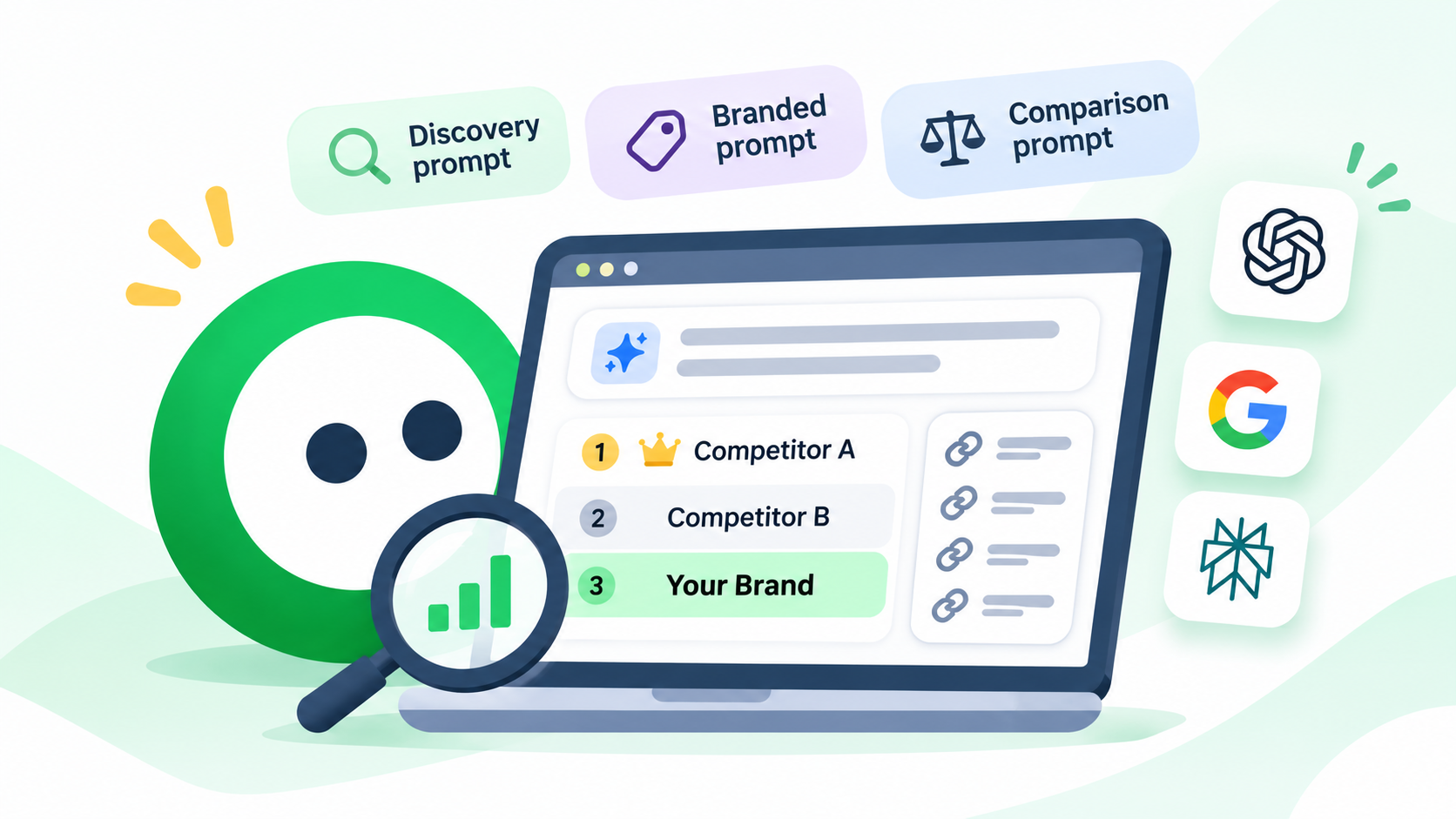
Build a small set that covers three types of questions:
- Discovery prompts: The buyer describes a need without naming your brand. These show whether you enter the conversation before someone knows you exist.
- Branded prompts: The buyer asks about your company directly. These show how AI describes your brand, not whether it knows the name.
- Comparison prompts: The buyer weighs you against a competitor. These help reveal which option the answer favors, and for whom.
Write down the exact wording. Keep it consistent when you repeat the checks, or you'll have a harder time telling whether the answers changed or the questions did.
2. Check the answers and save what you find
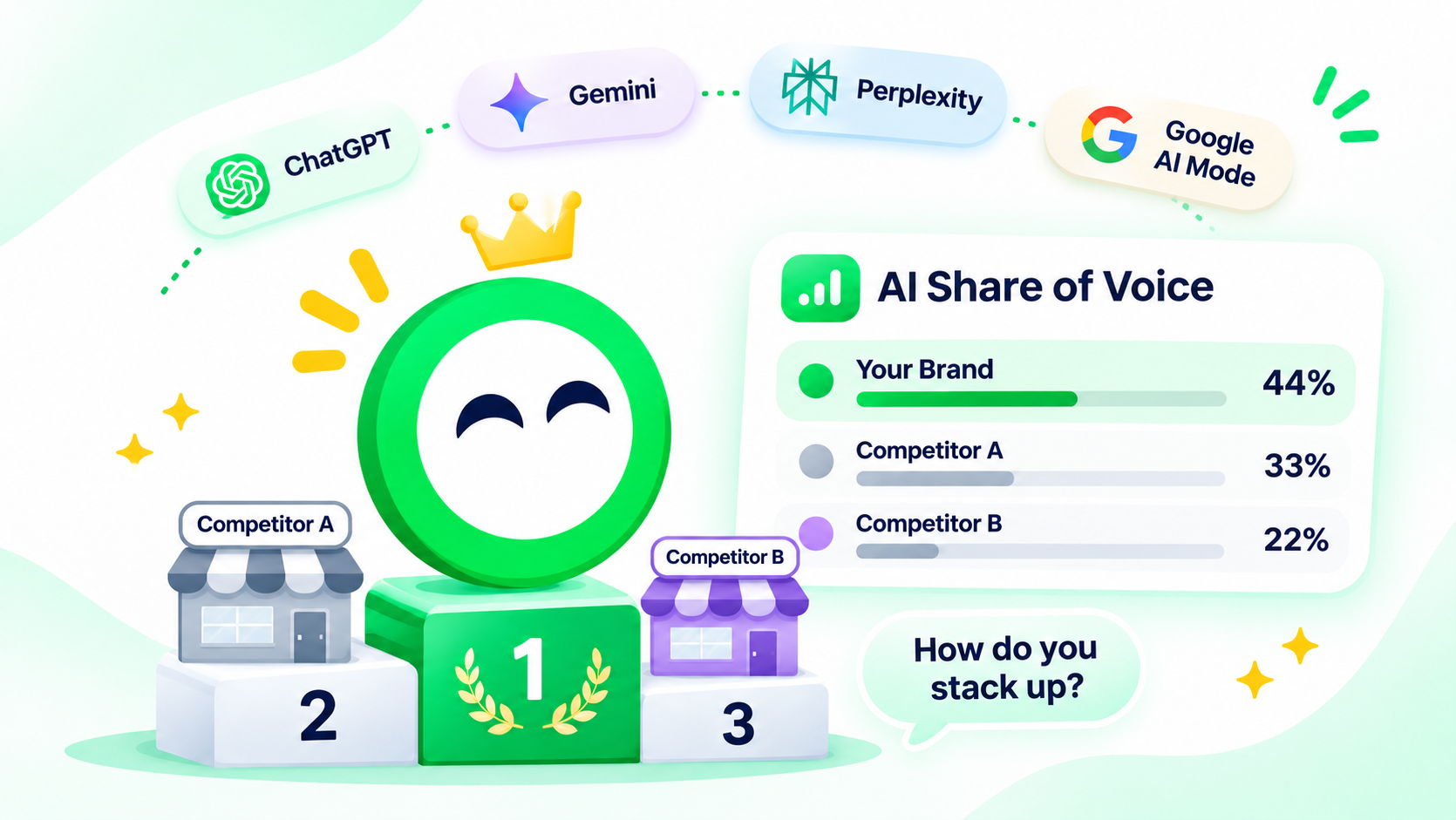
Run your prompts in the AI engines you want to monitor. ChatGPT, Gemini, and Perplexity are a manageable starting point for a manual review.
For each check, record the prompt, engine, date, full response, and any sources shown. Then note:
- Whether your brand appeared
- Which competitors appeared
- How your brand and its competitors were described
- Whether any brand received a clear recommendation
- Which pages were cited, if any
A spreadsheet is fine. The important part is keeping everything together, so you're not trying to compare a screenshot from last Tuesday with something pasted into Slack a month ago.
One important detail: Being listed first isn't automatically the same as being recommended. Read the actual wording. An answer might name your brand early, then explain why another company is the better fit.
3. Separate mentions from recommendations
A brand mention can feel like a win. But appearing in an AI answer isn't the same as getting its endorsement.
Give each result a label that reflects what the answer actually communicates:
- Missing: Your brand doesn't appear.
- Mentioned: Your brand appears, but without a clear recommendation.
- Recommended: The answer presents your brand as a strong choice for the question.
- Conditional recommendation: The answer supports your brand for a specific need, with qualifications.
- Negative assessment: The answer describes your brand as less suitable or highlights disadvantages.
Save a short excerpt from the response to support your label. If AI says your product suits smaller teams but recommends a competitor for large organizations, that's more useful than ticking a box marked mentioned.
And remember: a branded prompt contains your name already. Appearing in that answer doesn't tell you whether AI would have suggested you without being asked.
4. Look at competitors and cited sources
If the same competitor keeps appearing in answers where your brand is missing, that's worth investigating. Look for patterns across related prompts, rather than drawing conclusions from one response.
When an AI engine provides citations, open the pages. Do they discuss the buyer's specific problem? Is your competitor featured in a comparison or roundup? Does your brand appear at all? Are there gaps between the way your website describes your offering and the questions buyers ask?
These pages can offer clues, but they don't prove why an AI engine made a particular recommendation. AI responses aren't always accompanied by citations, and a cited page isn't necessarily the sole reason a brand appeared.
Treat what you find as a starting point for investigation, not a definitive diagnosis. If the problem seems to involve your own site, that's where a more detailed AI visibility audit becomes useful.
Oly can help connect these dots by bringing tracked prompts, answers, competitor appearances, and sources together, so you don't have to piece the story together yourself.
5. Repeat the checks to spot changes
One round gives you a snapshot. Repeating the checks helps you see whether that snapshot is typical.
Choose a schedule you can maintain. Weekly might suit an active, fast-moving category; monthly can be a useful starting point elsewhere. Keep the prompt wording and the way you record results consistent. Where practical, use comparable settings and a fresh conversation for each test.
Look for changes such as:
- Your brand moving from missing to mentioned or recommended
- A competitor receiving stronger recommendations more often
- A negative description appearing repeatedly
- New sources appearing alongside relevant answers
AI answers can vary even when the prompt stays the same. Don't treat one change as proof of a trend. Look for repeated signals across prompts, engines, and checks.
What this looks like in practice
Imagine you're tracking NorthStep Running, a fictional running shoe brand, against a fictional competitor called StridePeak.
Here's how three questions might produce very different results.
Discovery: Can AI find you without being asked?
Prompt: “What are the best running shoes for wide feet?”
- ChatGPT: Recommends StridePeak but doesn't mention NorthStep. Missing.
- Gemini: Includes NorthStep in a list without recommending it. Mentioned.
- Perplexity: Describes NorthStep as a strong option. Recommended.
Branded: What happens when someone asks about you?
Prompt: “Is NorthStep Running good for runners with wide feet?”
- ChatGPT: Says certain NorthStep models may work, depending on the fit. Conditional recommendation.
- Gemini: Recommends NorthStep for runners with wide feet. Recommended.
- Perplexity: Mentions NorthStep but favors competing brands. Mentioned.
Comparison: Who gets the nod?
Prompt: “NorthStep Running vs StridePeak, which is better for wide feet?”
- ChatGPT: Favors StridePeak for width but suggests NorthStep for cushioning. Conditional recommendation for NorthStep.
- Gemini: Mentions both brands but recommends StridePeak. Mentioned, not recommended, for NorthStep.
- Perplexity: Recommends NorthStep for this particular need. Recommended.
These brands and AI responses are entirely fictional. They illustrate how to interpret answers, not actual results from the engines named.
NorthStep isn't simply visible or invisible. Its position changes depending on the question and the engine. A raw mention count would miss most of that story.
Your AI recommendation monitoring checklist
Before you start tracking, ask yourself:
- Have you chosen realistic discovery, branded, and comparison prompts?
- Are you checking the same questions across the AI engines you're monitoring?
- Are you saving the full answers and noting where your brand appears or is missing?
- Are you distinguishing mentions from genuine recommendations?
- Do you know which competitors receive stronger recommendations?
- Have you reviewed cited sources for useful clues, without assuming they prove causation?
- Are you repeating the checks consistently enough to spot patterns?
You can do all of this manually. But if you'd rather skip the repetitive checking, Oly can help you keep track and investigate what the answers reveal.
Start with a free keenOly scan: Your first 10 ChatGPT prompts are free, along with 10 questions you can ask Oly about the results.