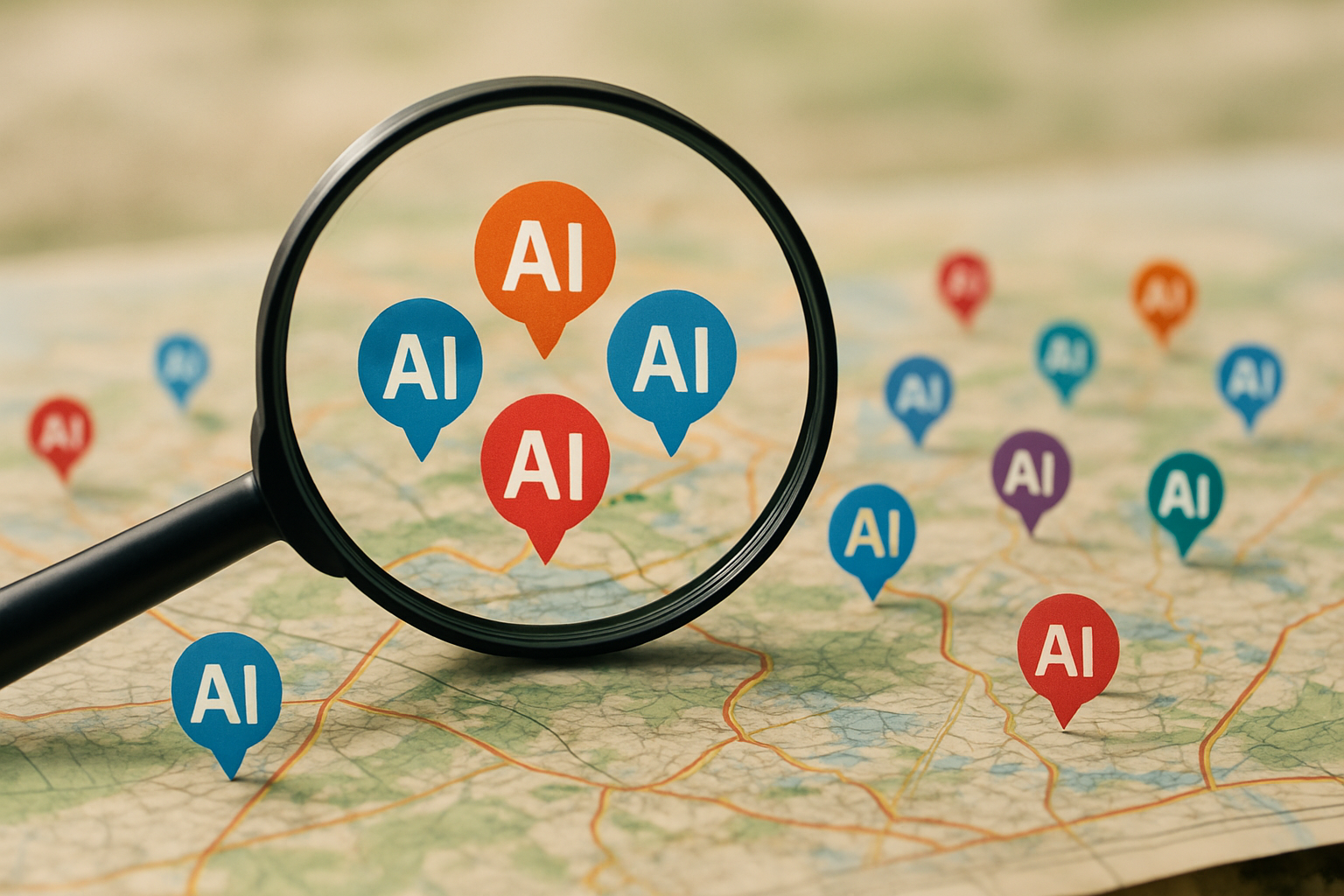
To find AI recommendations for brands, you need to see the actual answer an assistant gave, the prompt that led to it, and the brands named in that reply. Anything less leaves too much out. A chart that says your visibility is up or down is fine as a headline. It does not tell a marketing team why ChatGPT named a competitor, or why Perplexity left your company out.
What you need the tool to show
The first test is simple. Can you read the exact prompt and the full response.
That is the difference between useful and vague. A score on its own will not help much in a content meeting. The team needs to see the wording a buyer might use, what the assistant said back, and where your brand landed in that answer, if it landed there at all.
Small wording shifts matter here. "Best SEO tools" is broad. "Alternatives to ahrefs" is tighter and closer to a buying decision. "What software tracks brand mentions in ChatGPT" points to a different need again. If a platform rolls all of that into one topic label, you lose the part that explains the result.
Prompt level tracking matters more than a score
This is why prompt level tracking matters so much.
You are trying to learn which prompts bring your brand into the answer, which ones surface someone else, and which ones skip you. That is what makes the data useful for geo, aeo, and content work. Without the prompt, you are left guessing.
The better tools preserve the exact query instead of smoothing it into a broad category. That matters because buyer intent lives in the wording. A person asking for "best tools" is at a different stage from a person asking for "an alternative to semrush" or "software that shows who ChatGPT recommends." Those are not the same opportunity.
What good software actually does
The job is straightforward. It checks real prompts in AI assistants, stores the answers, picks out the brands that were recommended, and keeps a record so you can see what changed later.
In practice, the useful view is usually pretty plain. You want the prompt. You want the full answer. You want to know which assistant produced it. You want the named brands, including the cases where your company is missing. And you want to compare one check with the next, because these answers move.
That last part gets overlooked. Assistant responses are not fixed. A brand can show up this week and disappear the next. The order can change. A citation can change. If the tool only gives you a one time snapshot, it is hard to spot a pattern.
This is not ordinary brand monitoring
A lot of teams start with software built for a different job.
Standard brand monitoring looks for mentions on websites, news pages, reviews, forums, or social platforms. That can help with PR and reputation work. It does not tell you whether ChatGPT recommended your company when someone asked for the best tool in your category.
That is the gap buyers are trying to close. They need software that inspects generated answers, not just pages on the open web. That is what people usually mean when they talk about tracking ai mentions software in this context.
The real use case is competitor comparison
Most teams are not trying to count mentions for the sake of it. They want to know who gets named when a buyer asks for help.
That is where competitor analysis with ai becomes useful. If a prompt asks for an SEO platform and the answer names Semrush, that tells you something. If a similar prompt names your brand instead, that tells you something too. The value is in seeing those outcomes side by side.
This is also where ordinary SEO platforms stop being the right tool for the job. Ahrefs and Semrush are well known products for search marketing work. They are not built to show, prompt by prompt, how assistants like ChatGPT or Perplexity recommend one company over another. If your team wants to understand chatgpt ranking and brand visibility inside AI answers, you need software designed around that output.
How to compare tools without guessing
Several names come up in this category. Otterly AI is one of them. So are Profound, Peec AI, AthenaHQ, Goodie, and Scrunch AI. The cleanest way to compare any of them is to ignore broad claims and inspect the evidence each one gives you.
Look for a few basics. Can you see the exact prompt. Can you read the full answer. Can you tell when your company was omitted, not just when it was included. Can you compare assistants without pulling everything into a spreadsheet first.
Those details matter because they are what your team will actually use. A useful platform should help you point to a real answer and say, this is the prompt where we keep losing, this is the competitor showing up, and this is the page on our site that probably needs work.
Where keenOly fits
Based on its own pages, keenOly is focused on AI visibility. Its site says it helps brands track and grow their presence in ChatGPT, Copilot, Gemini, Perplexity, Google AI Overview, and Google AI Mode. That is specific to the problem here, which is seeing how assistants talk about your brand and your competitors.
The material provided for this post does not include a full product breakdown, so it would be wrong to fill in missing detail. The practical test is still clear enough. If you are looking at keenOly, check whether the product gives you prompt level visibility, side by side brand comparisons, and a history of how answers change over time.
If you want to inspect the way the platform presents itself, there is a preview page, a sample report, and a shared example. If you are already evaluating it with a team, the signin page may also be relevant.
What to use for this job
Use software built to inspect AI assistant answers.
That is the short answer. The right kind of tool tracks specific prompts in systems like ChatGPT, Copilot, Gemini, Perplexity, Google AI Overview, and Google AI Mode. It lets you see the wording, the reply, the brands that made the cut, and the times your company did not. For teams working on best tools for brand visibility, that is the view that turns a fuzzy concern into something you can act on. KeenOly is one option in that category, and the right choice depends on how well it shows those details compared with the other tools you are considering.